
Astoria espresso machine repair in the Twin Cities
On-site Astoria espresso machine repair in the Twin Cities: Plus4You group boilers, level probes, pressure switches and the autosteamer.
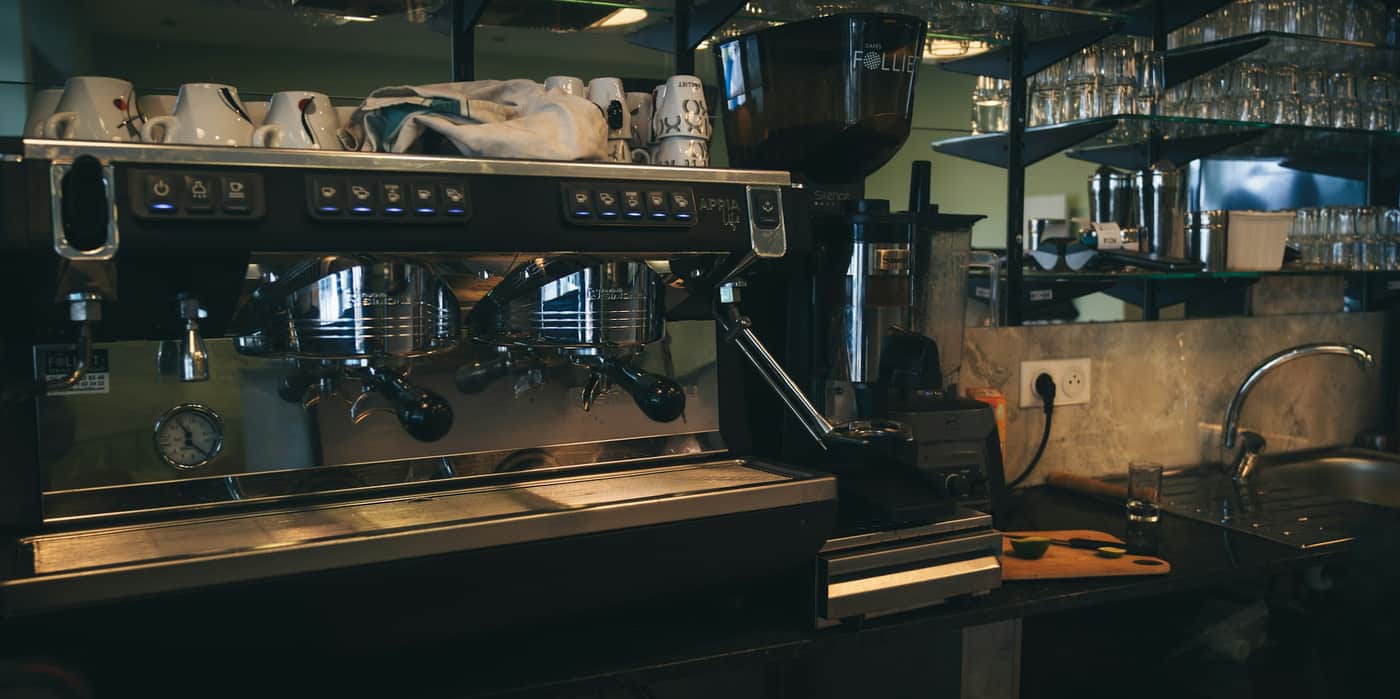
What fails most often on an Astoria espresso machine?
Astoria group heating and boiler filling are the usual call-outs: a group temperature probe or heating element that opens, a fuse or triac that burns out, a service boiler that times out while filling, and limed valves that stop the boiler venting. Perforated disks and undercup seals wear every few months.
Astoria espresso machines
Astoria Macchine per Caffè is based in Susegana, in the Treviso area of Italy, a single-shareholder company managed and coordinated by RYOMA MC S.p.A. Its current catalog lists the Smart Traditional line, with the ST400 and ST800, the AB200 series and a range of grinder-dosers. The Plus4You, with two to four groups, is the machine the maker's user manual describes at length. In the Twin Cities these machines sit behind the counter in bakeries, cafes and hotel breakfast bars where a trained barista pulls every shot. The maker's manual is a user manual, and it still lists the alarms and valve checks a technician works from.
Astoria builds its machines around small, separate group boilers, so a failure often stays in one group while the others keep working. That makes the first job a matter of reading which group the display names. The display keeps a history of the last eight alarms, which is the first thing we read. See espresso machine repair for the category, and the espresso machine no pressure guide if group pressure is the complaint. The wand wipe and purge is the operator's part.
Reading the plate on Astoria espresso machine
Astoria puts the Plus4You data plate at the front, and its voltage and power figures match the manual's specification table. On other Astoria models look at the front panel first, then the back. Have the model, the group count and serial number ready, and open the alarm history screen on the display, which keeps the last eight alarms, so we know which group raised which alarm. Say whether a softener is fitted and when it was last regenerated.
Astoria Plus4You: group boilers and heating circuits
Equipment guide
Seen on this line: One group not heating after a probe, element or thermostat fault / Burned fuse or triac on the control unit / Group out of service after a heating timeout
On the Plus4You each delivery group has its own coffee boiler of about 1.2 liters, with a cartridge heating element, a temperature sensor and a safety thermostat, plus a separate services boiler for steam and tea water. The maker's alarm list is a map of the failures. Heat sensor group open and water heat sensor open mean a probe is disconnected or defective. Check heating circuit group and coffee water heating timeout point to an open heating element, a tripped safety thermostat, a burned fuse in the F2 to F9 range or a defective triac on the control board. Because a group is switched off when its heating fails, one cold group is the typical sign.
Astoria Plus4You: filling, valves and descaling
Equipment guide
Seen on this line: Filling timeout on the services boiler / Safety or negative-pressure valve stuck with limescale / Thermostat tripped after the boiler ran low on water
The services boiler fills automatically through a level probe and a longer safety probe in the boiler, driven by the pump and a filling solenoid. The board cuts filling after a maximum time, 255 seconds on first installation and 90 seconds in operation, and then shows filling timeout. A thermostat with a manual reset button protects the element if the boiler runs dry, and the safety valve and a negative-pressure valve can stick in limescale. With the machine off and the boiler depressurized, a technician checks each valve by moving its pin: a pin that will not move means the valve is encrusted and is replaced. A pressure switch is set to 2 bar on a coffee boiler and 1.5 bar on the services boiler.
Astoria Smart Traditional, AB200 and the autosteamer
Equipment guide
Seen on this line: Autosteamer probe alarm and no automatic milk steaming / Group washing not completed so the reminder stays on / Grinder-doser burrs worn, giving powdery grounds
The ST400, ST800 and AB200 are the lines listed on the maker's site now, while the Plus4You user manual describes the autosteamer option: a steam nozzle with its own temperature probe, an air regulator and a push-button panel for milk drinks. The autosteamer sensor alarm points at that probe being disconnected or shorted, and the steam boiler heating timeout alarm covers the circuit behind it. Group washing is a prompted cycle with a blind filter, and the machine shows perform group washing until it is done. Grinder-dosers sold with these machines need their flat burrs checked after roughly 400 to 500 kilograms, conical burrs after 800 to 900, according to the manual.
Astoria fault codes by equipment
| Equipment | Code | Meaning |
|---|---|---|
| Espresso Machine Repair | HEAT SENSOR GROUP OPEN ON GROUP # | The group temperature probe is disconnected or defective, per the Plus4You user manual. |
| Espresso Machine Repair | CHECK HEATING CIRCUIT GROUP ON GROUP # | The group heating circuit is open: element interrupted, safety thermostat open, fuse F5 or F6 burned, or a defective triac. |
| Espresso Machine Repair | FILLING TIMEOUT | The services boiler did not fill within the maximum time, 255 seconds at first installation and 90 seconds in operation. Check the water supply, filling solenoid or pump filter, and fuse F3. |
| Espresso Machine Repair | AUTOSTEAMER SENSOR | The autosteamer temperature probe is disconnected, shorted or overheating. |
Sourcing parts for Astoria espresso machine
Astoria parts follow the maker's own names: group heating elements and probes, safety thermostats, the level and safety probes, pressure switches, safety and non-return valves, filling solenoids, perforated disks and undercup seals, and the control unit with its fuses and triacs. We confirm the model, group count and voltage before ordering, since fuse and heater values differ by version. The manual asks for original spare parts only after repairs that touch water or food.
Astoria next to Nuova Simonelli and La Marzocco
Compared with
More beverage and frozen brands
Questions about Astoria equipment
Only one group on my Astoria is cold. Does that mean the whole machine is failing?
Usually not. Each group has its own small boiler, probe and heating element, so a cold group points to that group's probe, element, safety thermostat, fuse or triac. The display names the group number. A technician tests those parts in order and does not touch the groups that are still heating.
What does filling timeout mean on the Plus4You?
The level probe in the services boiler did not report full before the board's limit, 255 seconds on first install and 90 seconds in operation. The cause is a closed or low water supply, a clogged pump filter, a failed filling solenoid or a blown fuse on the control unit. The first checks are the water tap and the softener. Switching the machine off and on restarts the fill.
How often does an Astoria group need new perforated disks and seals?
The maker's maintenance chart calls for replacing the perforated disk and the undercup seal of each group every four months, with original parts, and for a full machine check at least once a year. Leaking around the portafilter or weak showers mean the interval has passed.
My steam boiler pressure keeps climbing past normal. Can I clear it myself?
No. The safety valve is set to open at 2 bar, and a stuck valve or pressure switch is a safety problem. Turn the machine off and call. The maker's check involves pins and pressure inside the boiler, which a technician does after the pressure is released.
Why is limescale such a problem on a machine with a softener?
The resin softener must be regenerated with salt about every 15 days, more often in hard water or with heavy tea use. Once the resin is spent, hard water reaches the group boilers, elements and valves, and the probes and valves clog. We read the softener's regeneration date and count before blaming the machine.