
Espresso machine and grinder repair in Minneapolis and St. Paul
On-site commercial espresso machine and grinder repair in Minneapolis and St. Paul: pressure loss, leaks, steam wands and worn burrs.
Why is my espresso machine not building pressure at the group head?
Low pressure at the group usually means a worn or weakened pump, a clogged water filter or inlet strainer, an over-pressure valve stuck open, or a blocked group solenoid. Espresso is normally pulled near 9 bar at the group. A technician measures pressure at the portafilter before touching any part.
How an espresso machine fails and gets repaired
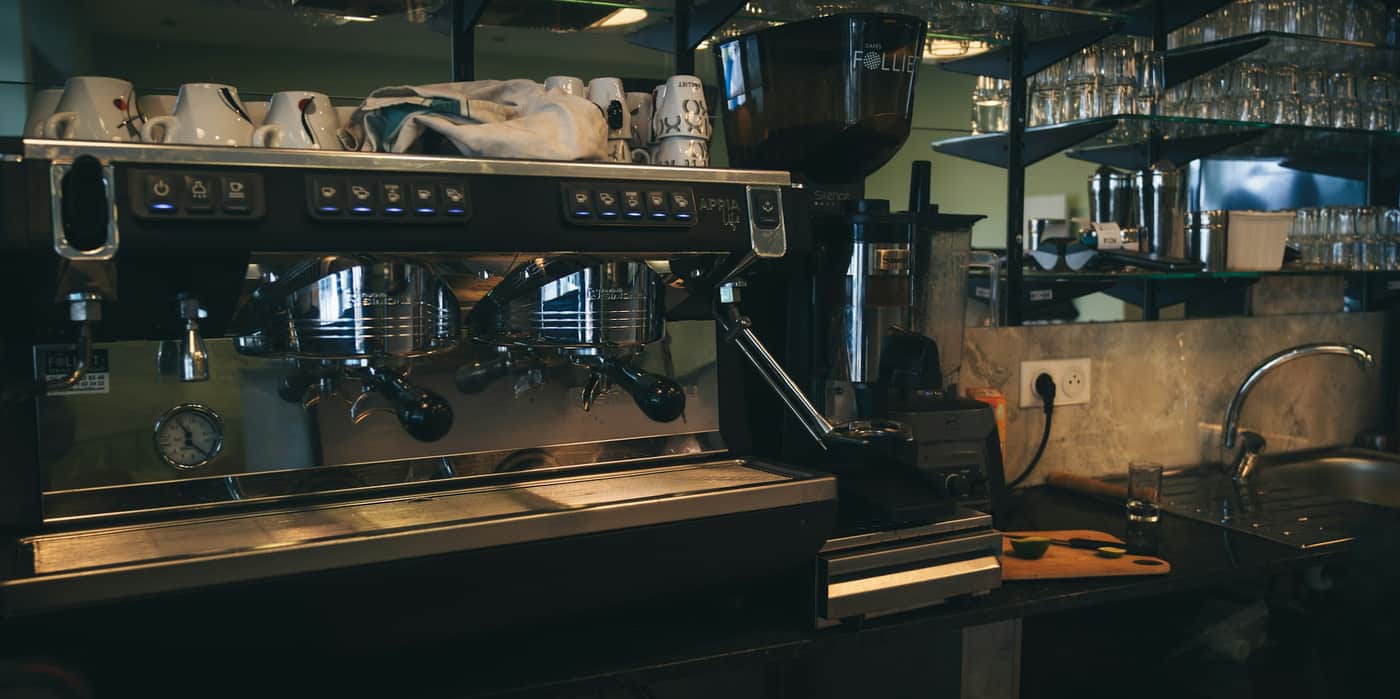
An espresso machine is a small boiler plant with a pump, a set of solenoid valves and a grinder bolted beside it, and every part of that chain shows up in the cup. Shots that run too fast, a steam wand that hisses without power, or a group that drips after the pull each point to a different component. Most of those components are wear items, and the repair is quick when the symptom is read correctly. We repair on site, so the machine stays plumbed and in place and the bar is back to pulling shots quickly.
The grinder gets blamed less than it should. Burrs go dull on a schedule set by the volume you grind, and a worn set makes shots run fast and bitter no matter how the machine is dialed in. For batch and drip brewers there is a separate page, commercial coffee brewer repair. If your problem is a pressure drop, the guide to an espresso machine with no pressure walks through the causes in order.
Espresso machine complaints, causes and corrections
| Complaint | Likely cause | Correction |
|---|---|---|
| Low or unstable pressure at the group | A pump that has lost output, a clogged inlet strainer, or an expansion or over-pressure valve venting too early reduces what reaches the puck. | A gauge on the group confirms the number, then the pump, valve and filters are tested one at a time and the failed one replaced. |
| Shots run too fast and thin | Burrs worn smooth, a shower screen or basket worn open, or a pump pressure well under spec all let water pass through the puck too freely. | We test the grinder first, then the basket and screen, then the pressure. Replacing a dull burr set often fixes what looks like a machine fault. |
| Group head drips or leaks around the portafilter | The group gasket has hardened and shrunk, or the shower screen retaining screw is loose. Over time the portafilter also wears so it locks in too far. | We replace the gasket and screen, clean the group, and check the portafilter lock angle against the gasket. |
| No steam or a weak steam wand | A boiler that is not heating, a clogged wand tip, a stuck steam valve, or a boiler level probe fouled with scale. | We test the boiler element and pressure control with the machine isolated, clear or replace the tip and valve, and clean the level probe. |
| Wet, soupy puck or portafilter sprays on release | A group solenoid that does not seal, or a clogged drain line, leaves the three-way solenoid unable to release pressure from the puck after the pull. | We clean or replace the solenoid and flush the drain tube, then confirm the puck comes out dry after the shot. |
| Machine will not fill or keeps filling | A failed level probe, a stuck fill valve, or a pump that cannot prime. A non-plumbed machine can also have an empty reservoir that the sensor reads incorrectly. | We test the probe and valve and verify the pump primes, and check the supply line or reservoir sensor. |
| Grinder runs but produces little or nothing | A clogged chute, a jammed burr carrier, foreign matter such as a small stone, or a failed motor capacitor. | The burrs are removed and cleaned and the chute and motor are tested. Foreign material is cleared and the capacitor replaced if it has failed. |
| Shot temperature wanders | A failing temperature probe or PID controller, scale on the heat exchanger or group, or a thermosiphon that has lost circulation. | We measure temperature at the group, test the probe and controller, and descale or flush the affected circuit. |
| Machine trips the breaker on warm-up | A shorted heating element or a leaking connection reaches the electrical side, or the machine is sharing a circuit with another heavy load. | We isolate power, test each element to ground, and check the supply circuit rating against the machine plate. |
Before you call about an espresso machine
- Backflush the group on schedule with the cleaning detergent and a blind basket, and look at the water that comes out. Brown, oily water means it is overdue.
- Check that the water supply valve is open and that the filter or softener cartridge is not past its date.
- Look at the pressure gauge on the pump and the boiler gauge. Write down both numbers while the machine is idle and again during a shot.
- Inspect the portafilter basket and the shower screen for coffee oil or blocked holes.
- Check the grinder hopper and chute for clumps or foreign matter, with the grinder switched off and unplugged.
Stop at gas valves, 208, 240 or 480 volt wiring, sealed refrigerant circuits, steam under pressure and anything live. Those are a call.
How we diagnose an espresso machine
Pull a shot and read the symptoms
Flow, color, timing and temperature in the cup tell a technician whether the cause sits in the grinder, the group or the pump before any panel comes off.
Measure pressure and temperature
A gauge at the group and a thermometer on the brew water separate a pump problem from a puck problem.
Test the water path
Supply pressure, the filter, the inlet strainer and the fill valve are checked, since poor supply mimics a pump fault.
Test heaters, probes and boards
With power isolated, boiler elements, level probes and temperature sensors are tested, and the controller output is read.
Calibrate the grinder
Burr condition and grind setting are checked against the dose, and the machine is tested with fresh coffee.
Verify the result in service
After repair we run a series of shots and steam cycles and confirm pressure and temperature hold.
Parts that fail most on espresso machines
- Vibratory or rotary pump
- Supplies brew pressure. Wear lowers output, and sediment and heat shorten its life.
- Group gasket and shower screen
- Seal the portafilter and spread water. Gaskets harden, screens clog with oil.
- Three-way solenoid valve
- Releases pressure from the puck after a shot. Scale keeps it from seating.
- Over-pressure and expansion valves
- Protect the plumbing from pressure spikes and vent when set pressure is exceeded.
- Boiler element and level probe
- Heat the water and signal when the boiler is full. Scale coats both.
- Temperature probe and controller
- Keep brew temperature stable. A drifting probe produces sour or bitter shots.
- Grinder burr set
- Cuts and sizes the grounds. Dull burrs change flow and taste before they stop cutting.
- Steam wand tip and valve
- Control steam output. Milk residue blocks tip holes and the valve seat wears.
Espresso machines we repair, by type
- Heat-exchanger machines
A single steam boiler with a tube running through it heats brew water. They are forgiving, but a clogged heat exchanger or a weak thermosiphon shows up as unstable shot temperature.
- Dual-boiler machines
Separate brew and steam boilers give independent control, with more elements, probes and a board that all can fail.
- Multi-group machines
Used in busy cafes. Saturated groups share one brew boiler, so a heater fault there affects every group; multi-boiler machines give each group its own boiler and heater, so a fault there affects only that group.
- Superautomatic and volumetric machines
Flow meters meter each dose and a board times each cycle. Faults often show as shots that cut off early or run long.
- Commercial grinders
On-demand or doser grinders with flat or conical burrs. Worn burrs, a weak motor capacitor and clumping all change the shot.
- Pod and compact commercial machines
Smaller footprint with the same pump and heater logic, repaired the same way, with part cost deciding whether the repair makes sense.
What decides the cost
- Whether the fault is a consumable like a gasket or burr set, or a component like a pump, boiler element or board.
- How hard the water is and whether a filter or softener has been used, since scale damages elements, probes and valves together.
- Machine design. A multi-group machine with separate boilers has more parts to test and replace than a single-group unit.
- Whether the part is current and obtainable, or discontinued so that the repair depends on a long lead time or a substitute.
- How many units are included. Servicing a machine and its grinders in one visit shares travel and setup.
Repair or replace the espresso machine?
A well-built commercial espresso machine can outlive several pumps, gaskets and heating elements, so repair is the normal path when the boiler and frame are sound. Replacement becomes reasonable when the boiler has scaled through or leaks at a weld, when a discontinued board cannot be sourced, or when repairs are stacking up faster than the shot quality justifies. A boiler that has scaled through is the usual end point on a machine that ran for years without a softener, while a worn pump or gasket set never is. For the general repair-versus-replace comparison, read the repair or replace guide.
Espresso machines by brand
Related to espresso machine repair
Where we repair espresso machines
- Espresso machine repair in Brooklyn Park, MN
- Espresso machine repair in Burnsville, MN
- Espresso machine repair in Champlin, MN
- Espresso machine repair in Chanhassen, MN
- Espresso machine repair in Chaska, MN
- Espresso machine repair in Columbia Heights, MN
- Espresso machine repair in Coon Rapids, MN
- Espresso machine repair in Cottage Grove, MN
- Espresso machine repair in Crystal, MN
- Espresso machine repair in Eagan, MN
- Espresso machine repair in Eden Prairie, MN
- Espresso machine repair in Edina, MN
Other beverage and frozen repairs
Questions about espresso machines
What pressure should an espresso machine pull at the group?
Most commercial espresso machines are set to pull around 9 bar at the group during a shot, which is about 130 psi. On rotary-pump machines the pump bypass sets brew pressure; the expansion valve only vents thermal expansion above it. A gauge at the group is the only reliable way to check what the puck actually sees.
How often should a group be backflushed?
Daily backflushing with detergent and a blind basket is the common practice in cafes. It clears oils that go rancid and clog the three-way valve. A deeper clean with the screen removed is done less often, depending on volume.
Do I need a water filter on an espresso machine?
Yes, an espresso machine needs a water filter in most areas, because minerals scale the boiler, probes and valves, and a filter or softener sized for the machine is the main thing that extends element and valve life. Matching the filter to local water hardness matters more than the filter brand.
My shots are sour. Is that the machine or the grinder?
Sour espresso shots can come from either the machine or the grinder: a cold group or a failing temperature probe gives sour shots, and so does a grind that is too coarse from worn burrs. We check brew temperature and burr condition before changing any part.
How long do grinder burrs last?
Grinder burr life depends on burr material, the beans, and how many pounds you grind. Shots running faster or needing a finer setting each week are the practical sign of wear. Replacing burrs is routine on a busy grinder.
Is a steam wand that hisses but has no power a boiler problem?
A steam wand that hisses but has no power is often a tip or valve problem rather than a boiler problem. A blocked tip, a worn steam valve seat or a boiler not holding pressure all cause the same symptom. We read boiler pressure first and then inspect the wand.