
Kitchen hood and ventilation service in Minneapolis and St. Paul
Kitchen exhaust hood, fan, make-up air unit, filter, light and control repair in Minneapolis and St. Paul. We do not clean ducts or service suppression.
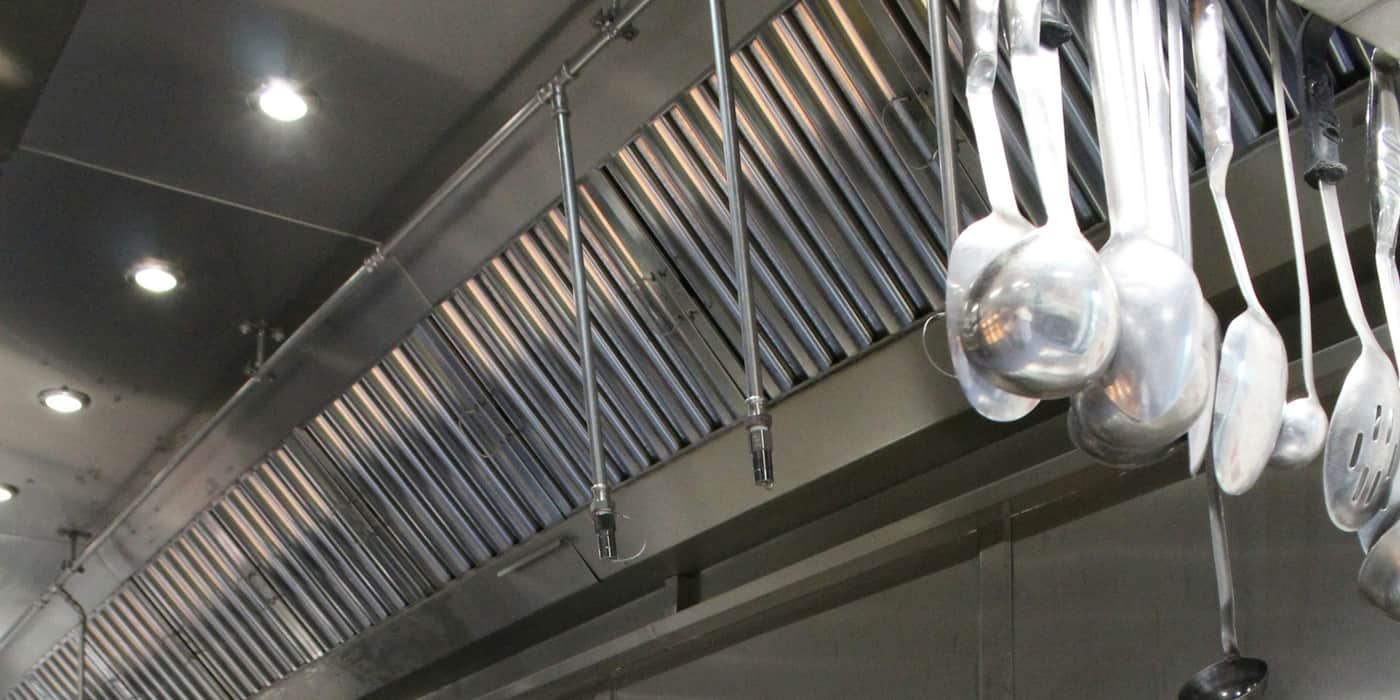
Why is my kitchen hood not pulling smoke out?
A kitchen hood that is not pulling smoke out usually has an airflow problem. The exhaust fan may be slipping on a worn belt or turning the wrong way, the filters or duct may be loaded with grease, or the make-up air unit may be off, leaving the kitchen too starved for replacement air for the fan to pull properly.
How a kitchen exhaust hood fails and gets repaired
A hood is only the visible part of a ventilation system. Behind the stainless canopy there are filters, a duct, an exhaust fan on the roof or the wall, and usually a make-up air unit that brings outside air back in to replace what the fan removes. When the kitchen gets smoky, hot or greasy, the cause could sit in any of those, and a hood that looks perfect can still be underperforming because a fan belt has stretched.
We service exhaust hoods, exhaust fans, make-up air units, hood filters, lights and controls. There are limits you should know up front. We do not inspect, recharge or repair fire suppression systems, which belong to a fire protection contractor, and we do not clean grease ducts or hoods to NFPA 96, which is the work of a certified hood cleaning company. Gas piping and building comfort heating are also outside our scope. Smoke that will not clear is covered in the kitchen hood not exhausting guide, and heat in the kitchen often points back to the cooking equipment under the canopy.
Kitchen exhaust hood complaints, causes and corrections
| Complaint | Likely cause | Correction |
|---|---|---|
| Smoke and heat roll out from under the hood | Exhaust volume has fallen. A slipping or broken fan belt, a worn motor, clogged filters, a fan wheel with grease build-up, or a fan running backwards after wiring work are the usual causes. | The technician checks fan rotation, belt tension and motor current, then replaces belts, bearings or the motor. Filters are cleaned or replaced as part of the diagnosis. |
| Kitchen feels sucked in, doors are hard to open | The make-up air unit is off, tripped or failing to match the exhaust, so the building runs under negative pressure. Cooking flames also lean or the pilot lights blow out. | We check the make-up air unit's controls, blower, dampers and its interlock with the exhaust fan, then restore or rebalance the supply. The balance affects capture, comfort and combustion. |
| Cold air blast in winter near the make-up air supply | The make-up air heater is not firing, a temperature sensor has failed, or its control has stopped modulating. Cold air then drops straight onto the cook line. | The technician tests the unit's controls, sensors and dampers, and the heater's ignition and gas valve. Piping to the unit is a gas contractor's job. |
| Hood light is dark, flickers or sweats | A lamp or ballast has failed, or the vapor-tight lens gasket has broken down so moisture and grease reached the socket. | We replace the lamp or driver, the gasket and the fixture if the socket is corroded, using the rating that fits a grease-laden environment. |
| Exhaust fan hums, squeals or vibrates | Bearings are worn, the wheel is out of balance because grease has accumulated on the blades, or the belt is misaligned. A fan allowed to vibrate loosens its mounting and the duct connection. | The technician replaces bearings, belts and pulleys as needed and balances or cleans the wheel. Heavy grease loading on the wheel is referred to a hood cleaning company. |
| Fan will not start from the hood switch | The switch, a relay or contactor in the control, a tripped motor overload or a loose connection has failed. The fire suppression system and its interlocks belong to a fire protection contractor, so we do not work on them. | We trace the control circuit, replace the failed relay, switch or overload and confirm the fan runs on its normal command. The suppression system and its interlocks belong to a fire protection contractor. |
| Grease dripping from filters or the hood edge | The grease cup or trough is full, the filters are loaded or installed backwards, or filters are missing. Grease drips onto cooking surfaces and the floor. | The technician reseats or replaces damaged filters and replaces the cup or trough if it is broken. Frequent cleaning is the job of the people or contractor handling filter and hood cleaning. |
| Hood noisy or loses power after a variable-speed or demand control is installed | A sensor or drive is miscalibrated, a wiring fault keeps the fan at a low speed, or the control sees no heat from the appliances and drops the speed. | We recheck the sensor placement, the settings and the drive's output, and confirm the fan ramps up when the sensors see cooking heat or smoke. |
Before you call about a kitchen exhaust hood
- Confirm the hood fan switch is on, and check the make-up air switch too, since many kitchens switch them separately.
- Check the breakers in the electrical panel for the exhaust fan and make-up air unit, and reset a tripped breaker once only. Do not go on the roof.
- Look at the filters: make sure all of them are in place, seated properly and facing the correct way. Never run cooking equipment with a filter missing.
- Check the grease cup or trough when the hood is cool and empty it into a proper container if it is full.
- Listen at the hood with the fan on. Note whether you hear squealing, thumping or nothing at all, because that tells the technician where to begin.
Stop at gas valves, 208, 240 or 480 volt wiring, sealed refrigerant circuits, steam under pressure and anything live. Those are a call.
How we diagnose a kitchen exhaust hood
Read the complaint against the whole system
Smoke, heat, noise and cold drafts each point to a different part of the hood, fan and make-up air path, so we start by clarifying the symptoms.
Check fan operation and rotation
Fan speed, rotation direction, belt tension, bearings and motor current are checked, because a backwards or slipping fan moves much less air.
Inspect filters, hood and visible duct
Filters, the grease trough and the accessible parts of the hood are examined, and heavy grease build-up is flagged for a certified hood cleaning company.
Test the make-up air and the interlock
The make-up air unit's blower, dampers, sensors and the link between it and the exhaust fan are tested, since balance decides capture.
Check controls and lighting
Switches, relays, demand controls and fixtures are tested last, and any fault that touches the fire suppression system is referred to the fire protection contractor.
Parts that fail most on kitchen exhaust hoods
- Fan belts and pulleys
- Stretch and slip with heat, and the first thing to fail on a belt-driven exhaust fan.
- Fan motor and bearings
- Sit in a compartment outside the airstream, but heat soaking through the housing wears the bearings until they seize.
- Grease baffle filters
- Catch grease before it reaches the duct and are replaced when dented or damaged.
- Make-up air blower and dampers
- Move and control the replacement air, and fail from belts, motors and actuators.
- Temperature sensors and controls
- Direct a make-up air unit's heating and a demand-control hood, and drift or fail over time.
- Vapor-tight light fixtures and lamps
- Lights that survive heat and grease, and fail when their gaskets give way.
- Relays, contactors and hood switches
- Start and interlock the fans, and wear with cycling and heat.
Kitchen exhaust hoods we repair, by type
- Type I grease hood
Sits over fryers, griddles, ranges and charbroilers, with listed grease filters and a duct built for grease-laden air.
- Type II heat and steam hood
Sits over dishmachines and ovens that produce heat and moisture but no grease. Fans and controls are similar, but there is no grease duct.
- Upblast roof exhaust fan
Moves air up through the duct and out above the roof. The motor and belts sit in a compartment outside the airstream; heat soaking through the housing and grease on the wheel wear the bearings and belts.
- Make-up air unit
Supplies outside air to replace what the exhaust removes. In winter it is heated, and its controls tie to the exhaust fan.
- Hood controls and lighting
Switches, relays, variable speed or demand controls and vapor-tight light fixtures that live in a hot, greasy space.
What decides the cost
- Access to the roof or fan. A rooftop upblast fan in a Minnesota winter takes more time and planning than a wall-mounted fan at ground level.
- Which part failed: a belt or lamp is simple, while a fan motor, a make-up air blower or a control board costs more.
- Whether grease build-up on the fan wheel or housing is contributing, which may need a cleaning company before repairs can be made.
- Whether the fault is in the make-up air heater's ignition and gas valve, which the technician tests, or in building gas piping, which goes to a gas contractor.
- Parts lead time for fans, motors and controls on older or specialty systems.
Repair or replace the kitchen exhaust hood?
Fans and motors give long service when the belt is kept right and the wheel stays clean, so repairing belts, bearings, motors, controls, lights and make-up air components is the usual path. Replacement of a fan or make-up air unit becomes the question when the housing is corroded, the unit cannot deliver the required airflow after repair, or a kitchen's equipment has changed and the system no longer fits. The repair or replace guide helps with that decision. Changes to a hood's design airflow may involve your mechanical code authority, so we recommend you speak with them first.
Kitchen exhaust hoods by brand
Related to kitchen exhaust hood repair
Related repairs
Where it matters most
Where we repair kitchen exhaust hoods
- Kitchen exhaust hood repair in Apple Valley, MN
- Kitchen exhaust hood repair in Blaine, MN
- Kitchen exhaust hood repair in Bloomington, MN
- Kitchen exhaust hood repair in Brooklyn Center, MN
- Kitchen exhaust hood repair in Brooklyn Park, MN
- Kitchen exhaust hood repair in Burnsville, MN
- Kitchen exhaust hood repair in Champlin, MN
- Kitchen exhaust hood repair in Chanhassen, MN
- Kitchen exhaust hood repair in Chaska, MN
- Kitchen exhaust hood repair in Columbia Heights, MN
- Kitchen exhaust hood repair in Coon Rapids, MN
- Kitchen exhaust hood repair in Cottage Grove, MN
Questions about kitchen exhaust hoods
Who cleans the grease out of the hood and duct?
A certified hood cleaning company does that work to NFPA 96. We repair the fan, make-up air, filters, lights and controls, and we will tell you if grease build-up is part of why the system is not performing.
Who services the fire suppression system over the cooking line?
A fire protection contractor inspects, recharges and repairs the fire suppression system over a cooking line, along with the interlocks that tie it to the cooking equipment. We can still find faults in the hood's own switches, fan controls and make-up air controls.
Why does a kitchen exhaust fan need make-up air?
An exhaust fan can only move air that can get into the building. Without replacement air the kitchen goes under negative pressure, the hood loses capture, doors become hard to open and pilot flames can be pulled.
How often should hood filters be cleaned or replaced?
How often hood filters need cleaning or replacing depends on what you cook. A fryer and charbroiler line loads filters far faster than an oven line, so most kitchens clean filters on a house schedule that matches their cooking volume. NFPA 96 sets how often the whole system is inspected by cooking volume, and your hood cleaning company applies it. We check filter condition during any visit.
Why is my exhaust fan loud after a belt change?
An exhaust fan is loud after a belt change when the new belt is too tight or misaligned, the pulleys are worn, or the wheel is out of balance. We check alignment, tension and bearings as a set rather than only fitting a belt.
Can the hood run without the make-up air unit?
Yes, a hood can run without the make-up air unit, but it will not perform properly, and the building will be under negative pressure. If the unit is interlocked with the fan it may also lock out the fan, and we diagnose which is the case.