
Ice machine making small, hollow or cloudy ice: what it means
Ice machine making small, hollow, cloudy or soft cubes? See how scale, water flow, filters and the thickness probe affect ice quality.
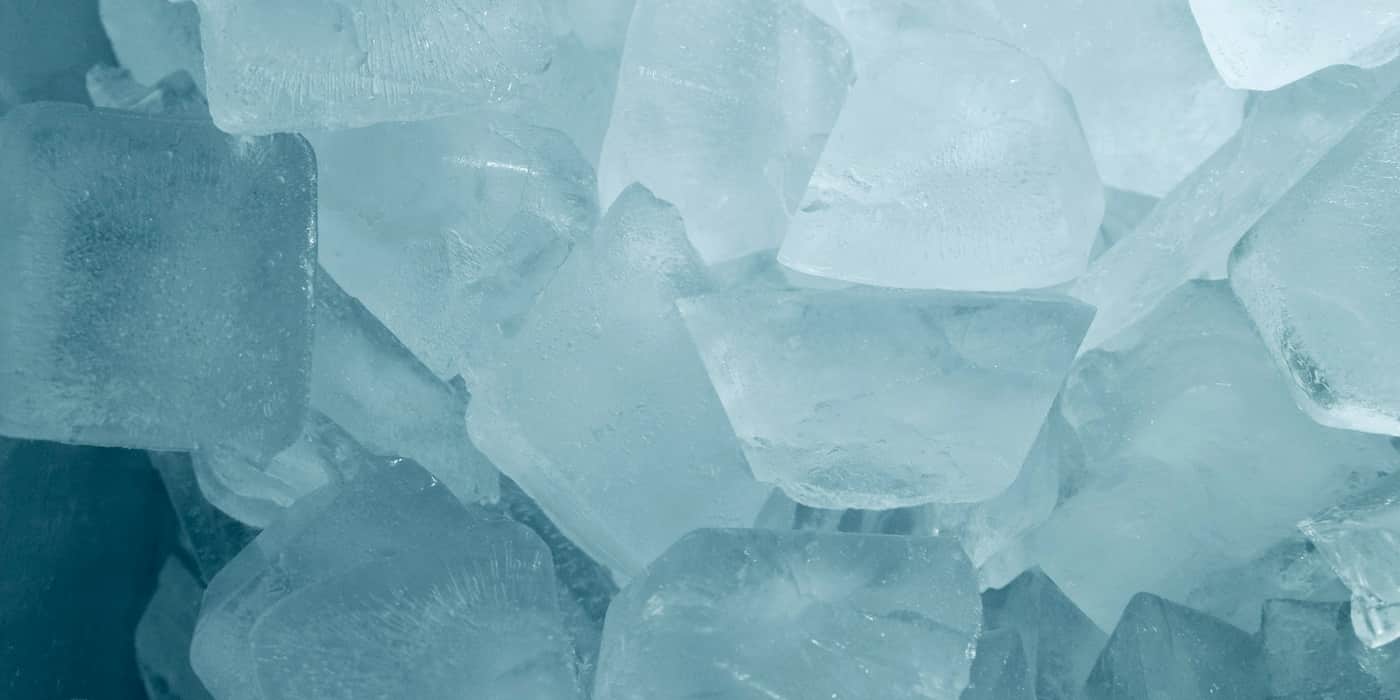
Why is my ice machine making small, cloudy or hollow ice?
Small, hollow or cloudy ice means the machine is running but the freeze is wrong. The usual causes are scale on the evaporator, low or uneven water flow, a fouled thickness probe, high incoming water temperature and a spent filter. Minerals in the water cause most of the cloudiness. Low refrigerant needs a technician.
What does each ice defect tell you?
Ice that comes out wrong is an early warning the machine is giving you. A kitchen that reads it correctly saves the diagnostic time, because each defect points at a different part of the system. Look at the cubes in the bin, not in the glass, and compare the oldest ice with the newest. The table below ties the common defects to their usual causes on batch-type cube machines. Nugget and flake machines behave differently and are covered further down. If the machine has stopped making ice altogether, read ice machine not making ice instead.
| What the ice looks like | Usual cause | First thing to look at |
|---|---|---|
| Small cubes, thin walls | Ice thickness probe set or fouled so the freeze ends early | Probe and bridge thickness |
| Cubes with a hole or missing corner | Water not reaching part of the evaporator, or weak spray | Water distribution tube, pump, scale |
| White or cloudy cubes | Dissolved minerals and air trapped in the freeze; scale on the plate | Water filter and scale |
| Soft, wet or slushy cubes that melt in the bin | Freeze not cold enough, warm room or incoming water, bin drain backing up | Condenser airflow, bin drain |
| Cubes fused into clumps | Harvest too slow so ice refreezes across the grid | Scale, harvest water flow |
| Yellow, grey or slimy cubes with an odor | Biofilm in the reservoir or distribution parts | Sanitizing cycle history |
Why is ice cloudy, and is it a problem?
Clear ice is made by freezing a sheet of water that is moving across a cold plate. The water carries dissolved minerals and air, and as the ice grows the machine keeps washing the dissolved material out of the freeze zone. At the end of the cycle some of that water is dumped, and a fresh charge goes in for the next batch. When the water is high in dissolved solids, or the flow across the plate is too slow, the minerals and gas get locked into the ice and turn it cloudy or white.
Cloudy ice is not unsafe in itself, but it points at the same causes that lead to equipment faults. Heavy scale on the evaporator is a cloud source and also a harvest problem. A spent filter lets sediment through. If the cloudiness appears suddenly in a machine that made clear ice for months, something changed: a filter ran past its change date, the water softener regenerated badly, or scale finally built up enough to disturb the sheet flow.
Cloud that is evenly white all the way through usually points to water quality. Cloud only at the base of each cube points to the last part of the freeze, which is where minerals concentrate and where a shortened dump cycle or low water flow does the most harm.
How does scale on the evaporator change the ice?
Scale is calcium and magnesium left behind as pure water freezes onto the plate; the sump water gets more concentrated each cycle until minerals drop out onto every wet surface. It collects on the evaporator, which spoils the surface that ice grows on, on the float or level probes, which fool the control board, and on the distribution tube or spray bar, where it plugs the holes that spread water across the plate. A plugged hole means one stripe of the plate gets less water, and that stripe makes thin or hollow ice.
A machine that has scaled enough to make cloudy or ragged ice often has a thicker scale layer inside the water reservoir and on the plate edges than you can see through the door. The fix is a descaling cycle with the descaler the manufacturer's manual names, followed by a rinse and a sanitizing step, which is part of ice machine cleaning and sanitizing. A technician will also check the probes, the pump and the water curtain after descaling because scale damage does not always wash out.
Do not mix cleaners, and never pour descaler or sanitizer into a bin with ice in it. Follow the label on the cleaner and rinse the water path completely before the machine goes back into production.
Could low water flow or the thickness probe be the cause?
Even with a clean plate, the machine only makes a good cube if the pump delivers a steady sheet of water. A weak pump, a loose hose, a partly closed supply valve or a clogged inlet screen reduces the sheet flow and the cubes fill in unevenly. Starved water also shows up as hollow cubes and as ice that is frozen too hard to the plate and slow to release.
The thickness probe, or the water-level or timer logic on some models, decides when to end the freeze. A probe coated in scale reads the bridge between cubes too soon or too late. Too soon gives small, thin ice. Too late gives a thick slab that is slow to drop and may jam the harvest. Adjusting a probe is a technician's job because a wrong gap can ice up the evaporator.
- Small cubes everywhere: suspect the probe or an early end of the freeze.
- Hollow in the same spot every batch: suspect one plugged water hole or a bent distribution tube.
- Cloudy only: check the filter and the water first.
Could warm water or a warm room be the cause?
The ice machine cannot freeze water that arrives too warm or reject heat into a hot room. Incoming water above the machine's rated range, a kitchen that sits at high ambient temperature in summer, or a condenser that is blocked with grease all raise the freeze time and soften the ice. A machine that makes good ice at night and poor ice after the lunch rush, or good ice in January and soft ice in July, is describing an airflow or water temperature problem.
Low refrigerant charge also produces thin or irregular ice, along with a long freeze and an evaporator that frosts unevenly. That is a sealed-system fault and belongs to a refrigeration technician; federal law requires EPA Section 608 certification to open a sealed refrigerant circuit, so do not try to add refrigerant. Brands differ in how they tell you: Ice-O-Matic, Hoshizaki and Manitowoc machines each use different probe and sensor layouts, which is why the model number matters. Our ice machine repair page covers what the visit involves, and ice machine maintenance covers the schedule that prevents most of these defects.
Do nugget and flake machines fail the same way?
A nugget or flake machine freezes water onto the inside of a cold cylinder and scrapes it off with a rotating auger. Soft, wet or slushy nuggets point to a freeze that is too warm, a worn auger or a water level in the reservoir that is set too high. Scale builds on the cylinder wall and on the auger, shortening both. These machines have no thickness probe, so a quality complaint means the water level, the cylinder or the refrigeration side.
A safe sequence to follow
Compare old and new ice
Take a scoop from the top and bottom of the bin and note whether the defect is in every batch or only recent ones.
Check the filter date
If the cartridge is past its change date, replace it with the manufacturer's part and run a few batches.
Check the room and the airflow
Make sure the intake and exhaust are clear and the room is not unusually hot. Wash the air filter if the machine has one.
Read the cubes against the table
Match what you see to the table above so you can report the exact pattern.
Schedule a descale and sanitize
If the machine is overdue for cleaning, call to schedule it rather than pouring cleaner in yourself, and do not clean over ice in the bin.
When to stop and call
- The defect continues after a new filter and a clear condenser.
- Cubes are hollow or thin in the same place every batch.
- Ice has a taste, a smell or slime on the plate or in the reservoir.
- The evaporator is frosting unevenly or the freeze seems to take much longer than it used to.
Questions about this problem
Is cloudy ice from a commercial machine safe to serve?
Yes, cloudy ice from a commercial machine can be served when the cloudiness comes from dissolved minerals and trapped air, because that is a quality issue, not a safety issue. Off taste, odor, slime or discoloration are different, and they mean the machine needs a cleaning and sanitizing cycle before you serve more ice.
Will a water filter make my ice clear?
A water filter improves ice but may not make it fully clear, since a correct filter removes sediment and chlorine taste and slows scale. It does not always remove dissolved minerals, so a heavy-mineral supply may still make slightly cloudy ice. Scale control and the machine's dump cycle matter as much as filtration.
Why are my cubes smaller in summer?
Ice machine cubes come out smaller in summer because warm incoming water and a hot, greasy kitchen raise the freeze time, and some machines end a freeze early when the cycle runs long. A clean condenser and clear airflow usually bring cubes back. If they do not, have the probe and refrigeration side checked.
Does a nugget machine have a thickness probe?
No, a nugget machine has no thickness probe, because nugget and flake machines freeze onto a cylinder and scrape it with an auger, so ice quality depends on the water level, cylinder condition and refrigeration. Cube machines are the ones that use a thickness probe to end the freeze.
Why are the cubes in my bin fused into clumps?
Cubes fuse when ice sits wet or when harvest runs slow enough for the grid to refreeze across them. Check that the bin drain runs freely and that scale is not slowing the harvest water. A bin that melts and refreezes between uses is a drain or ambient heat problem, not a probe setting.