
CMA dishmachine and glasswasher repair in the Twin Cities
CMA dishmachine and glasswasher repair on site in Minneapolis, St. Paul and the surrounding suburbs, for bars, cafes and restaurant dish rooms.
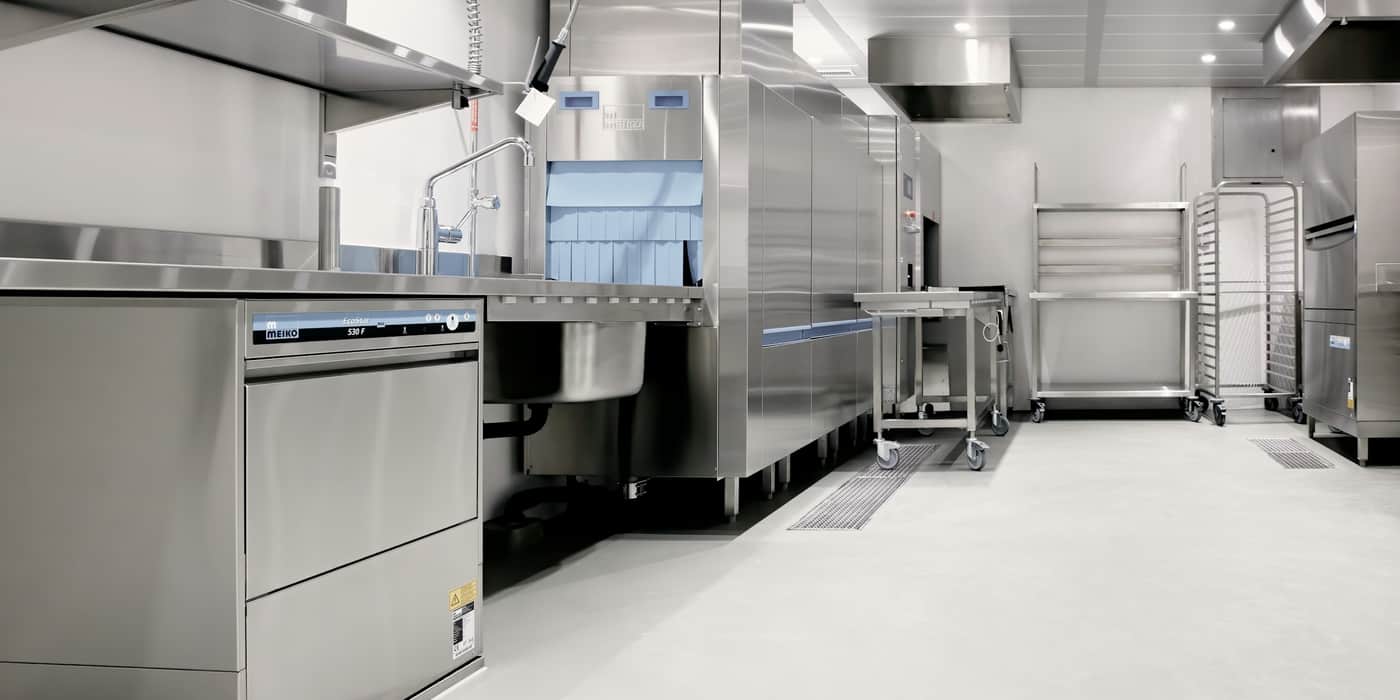
Why does my CMA dishmachine leave dishes dirty or wet?
Dirty dishes on a CMA usually mean blocked wash arm jets, a failing wash pump, or low tank temperature. Wet or filmy dishes point to rinse problems: a clogged rinse nozzle, empty rinse aid, or a final rinse solenoid that is slow to open. We check pressure, temperature and chemical feed in that order.
CMA Dishmachines glasswashers and dishwashers
CMA Dishmachines is based in Cerritos, California, and became part of the Ali Group in 2004. The company builds undercounter machines, door-type machines, conveyors and glasswashers, and the smaller units are the ones you see most often here. Think of a bar's glasswasher, a coffee shop's undercounter, or a busy restaurant's single-rack machine tucked next to the pot sink. These machines run all service long and get little attention until they stop, and a dead glasswasher on a Friday night backs up the whole bar.
Because so many CMA machines sit in tight spots, access shapes the repair as much as the fault does. A glasswasher under a back bar may need to be pulled out to reach its drain pump, and a door machine beside a wall may hide the booster. Our glasswasher repair and commercial dishwasher repair pages describe how we diagnose each type before we quote a repair, so you see the written price before any part is ordered.
Reading the plate on CMA Dishmachines glasswasher
On most CMA machines the serial plate is a metal tag on the side or back panel, sometimes inside the front access panel on undercounter units. It lists the model, serial number, voltage and amperage. Bring that, plus whether the machine uses hot water or chemical sanitizing, the water supply temperature, and any message on the control. Pulling an undercounter unit forward a few inches before we arrive helps.
CMA glasswashers and bar machines
Equipment guide
Seen on this line: Drain pump jammed by glass fragments and pulp / Cloudy glasses from scale and low rinse aid / Strainer and wash arm clogged with sugar residue
Glasswashers punish their parts differently from a dish room machine. Bar glasses carry milk, citrus pulp and sugar, and those residues clog the strainer and the wash arm faster than plate scraps do. We see drain pumps jammed by broken glass and lemon seeds, rinse nozzles furred with scale, and chemical feeders that run dry because nobody noticed the jug was empty. Cloudy glassware is rarely a machine fault alone: it is usually a mix of hard water, too little rinse aid and a rinse that is not reaching every nozzle. We test each of those before replacing a part.
CMA undercounter and door-type machines
Equipment guide
Seen on this line: Scaled element leaving the tank cold / Wash pump running without pressure / Fill valve sticking open and overfilling the tank
These are the workhorses of small kitchens, and they fail in familiar ways. A heater element coated in scale will not bring the tank up, so the cycle runs but the dishes come out greasy. A tired wash pump hums but does not build spray pressure, and a fill valve that sticks open overfills the tank and leaks from the door. Door switches and cycle timers are the other frequent repairs, since a door opened a hundred times a shift wears its switch quickly. On chemical-sanitizing units we check the feed tubing and pump before looking at the heater.
Routine care for CMA machines
Equipment guide
Seen on this line: Wash arms plugged with lime and food debris / Door gasket cracked and dripping / Chemical lines drawing air from a loose fitting
A CMA that is cleaned and delimed on a schedule rarely needs a heavy repair. The routine is simple: drain and flush the tank, pull and clean the wash and rinse arms, scrub the scrap screens, delime the heating element and tank, and check that detergent, rinse aid and sanitizer feeds are primed. We also look at door gaskets and drain hoses, which crack or sag with heat. A visit also gives the technician a baseline of tank temperature and rinse pressure to compare against at later calls. Glasswasher strainers and undercounter scrap screens get the same attention, because they catch the debris that otherwise reaches the pump.
Sourcing parts for CMA Dishmachines dishwasher
CMA parts are sourced through the manufacturer's network and compatible suppliers for common items like drain pumps, solenoid valves, heater elements and door switches. Controls, wash pumps and model-specific tubs are matched to the serial number so the part fits. Availability varies by part and by supplier, so when you call we tell you the earliest opening and what a given repair involves, then you approve a written price.
CMA Dishmachines next to Hobart and Champion
Same owner: Ali Group
More warewashing brands
Questions about CMA Dishmachines equipment
Why is my CMA glasswasher leaving a cloudy film on glasses?
A cloudy film on glasses from a CMA glasswasher is usually mineral scale or detergent residue. The rinse aid may be empty, the rinse nozzles may be scaled, or the water may be hard enough to coat glass as it dries. We test the rinse pressure and chemical feed before suggesting a softener or part.
Why does my CMA undercounter stop mid-cycle?
A mid-cycle stop on a CMA undercounter often means the tank never reached temperature, the door switch opened briefly, or the drain pump jammed. We watch a full cycle with the panel off to see where it halts, because each of those faults gives a different sound and sequence.
Can a CMA drain pump be replaced without moving the whole machine?
A CMA drain pump can often be replaced without moving the whole machine, because on many undercounter units we can reach it from the front or by sliding the machine forward, though that depends on the cabinet. If the unit is boxed in, we may need to disconnect and move it. Clearing space before we arrive speeds the job.
How often should the wash arms on a CMA be cleaned?
In a bar or cafe, the wash arms and scrap screens on a CMA need a quick daily rinse, with a full pull-and-clean on a schedule that matches your water. Hard water and heavy soil shorten that interval, so we adjust it after seeing how fast scale builds.
What do I do if my CMA smells like a chemical or sour?
If a CMA smells sour, old food or milk is usually sitting in the strainer or tank. A strong chemical smell can mean a feed line leaking or over-dosing. Drain, clean the screens and rinse the tank, and call us if the smell returns. Never mix cleaning chemicals.