
Equipment repair for hospital and senior living kitchens
On-site repair for hospital and senior living kitchens in the Twin Cities: tray-line warmers, dish machines, ice machines and walk-ins.
Why can't a care-facility kitchen just close when equipment fails?
A care-facility kitchen cannot close when equipment fails because residents and patients eat three meals a day, every day, and many have diet orders that cannot be skipped. A failed cooler or dishmachine has to be handled with the people being fed in mind, and with the facility's food-safety rules in view.
Hospitals and Senior Living: what is different
A hospital or senior living community has no closed night. The people eating there are patients and residents who depend on the kitchen for every meal, and many are on texture-modified, diabetic or other ordered diets that have to be prepared correctly. When the kitchen loses a walk-in or a dish machine, the plan has to keep trays moving, so a service call starts with what the kitchen can still do and what it cannot.
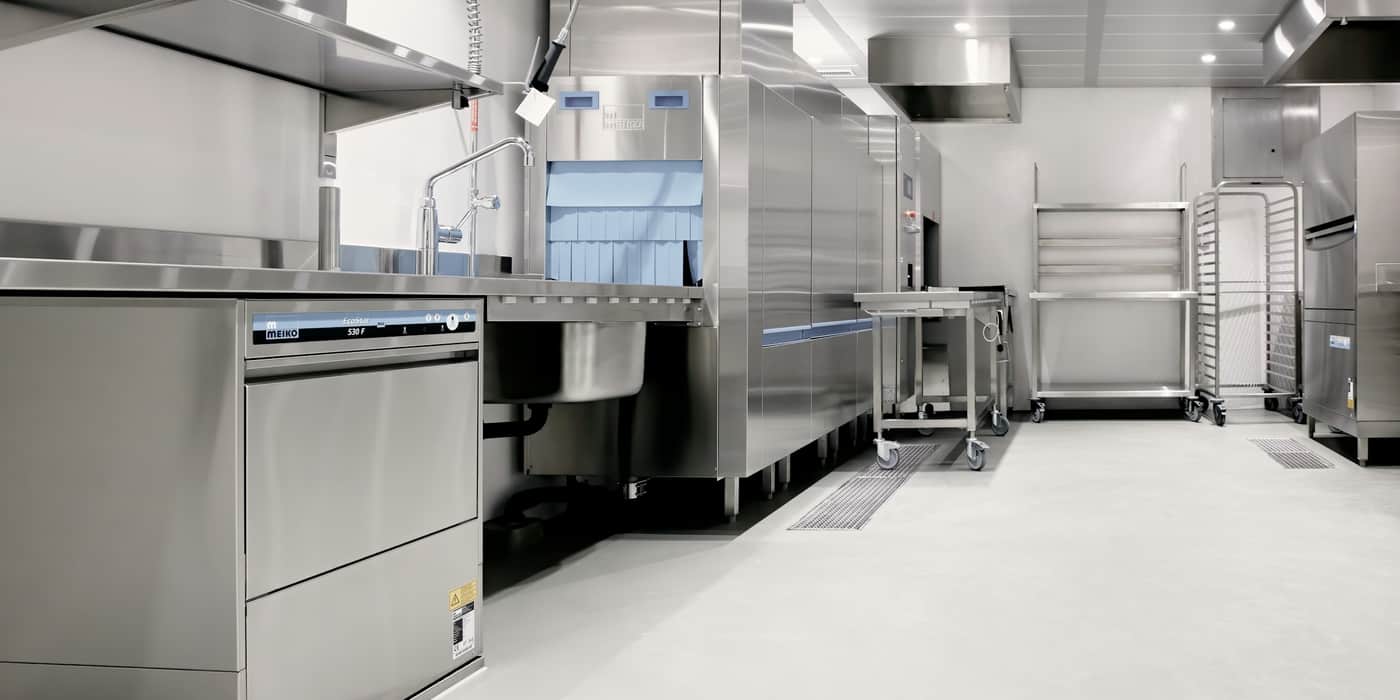
The kitchen itself is built around volume, safe holding and traceability. A commercial dishwasher runs through most of the day, food warmers and heated carts hold meals during delivery to floors or dining rooms, and cold storage holds days of supply. There may be a main kitchen plus smaller kitchenettes in each wing, all with their own refrigerators and ice machines. Each of those pieces fails differently and matters to a different group of residents.
What shapes a repair visit here
Meals never stop
Breakfast, lunch, dinner and snack rounds repeat every day of the year, including holidays. There is no quiet week for planned downtime. The best repair window is the stretch after one meal's cleanup and before the next meal's prep, and some work has to be staged so the kitchen is never entirely without a unit.
Diet orders limit the workaround
Texture-modified, low-sodium, renal and diabetic diets cannot be swapped for whatever is on hand. When a kettle, blender or steamer is down, the dietitian and kitchen manager have to rework the menu. Knowing which equipment a particular diet depends on tells us which repair is most urgent, and that comes from your dietitian more than from the equipment itself.
Food safety is about vulnerable people
Many patients and residents are older, ill or immune-compromised, so a temperature failure carries more weight than in a restaurant. The temperature logs your staff keep for coolers, freezers, hot holding and the dish machine are the first place a failing unit shows up, so bring them to the visit and show us the day the readings started to slip.
Infection control around the kitchen
Care facilities watch what moves between the kitchen and patient areas. A technician working beside an open tray line or a nourishment pantry should expect to follow your hand-washing, footwear and tool-cleaning rules, and ice machines near care often have their own cleaning log. Tell us what your infection-prevention staff expect, and whether a unit must be sanitized after we open it.
Tray assembly runs on a clock
Trays have to be built, loaded into carts and delivered to units while hot food is still hot and cold food still cold. A cart heater that never reaches temperature, a cold rail that drifts or a dumbwaiter that stalls adds minutes the food does not have. We ask which step of the tray line slows first, because the symptom often points past the unit that is reported.
Equipment that matters in hospitals and senior living
- Commercial Dishwasher Repair
A high-temperature or chemical machine washes trays and flatware all day. A failure to reach sanitizing temperature or concentration means dishes cannot be reused as they are.
- Food Warmer & Steam Table Repair
Tray carts and hot holding cabinets keep meals above 135°F while they travel to units. A cart that loses heat on the way makes cold food at the bedside.
- Ice Machine Repair
Ice serves hydration carts, dining rooms and nourishment stations. Machines near patient care need dependable cleaning and filtration, and a dead machine disrupts hydration rounds.
- Walk-In Cooler Repair
Days of resident or patient meals sit here at a time. A box that drifts above 41°F puts a large share of the week's food at risk, and replacing it quickly is difficult.
- Walk-In Freezer Repair
Frozen proteins, entrees and supplements are bulk stored. A freezer that loses temperature overnight has no easy workaround in a facility feeding hundreds.
- Blast Chiller Repair
Soups, purees and cooked proteins made ahead for modified diets have to cool on a clock before they go into storage, and a chiller that cannot pull heat out holds up the next day's production.
- Refrigerated Prep Table Repair
The cold rail on a tray line holds salads, desserts and sides while trays are built. A rail that drifts warm during a long assembly period sends product back to the walk-in mid-meal.
- Commercial Coffee Brewer Repair
Dining rooms and nourishment stations pour coffee and hot water for hydration rounds all day, and a failed brewer or urn is noticed by residents before staff.
Fitting the visit around the operation
Care kitchens plan repairs around the meal cycle. The usual window is after tray cleanup and before the next meal's prep, or overnight where the facility can support it. Planned work, like gasket replacement or ice-machine cleaning, can be staged so one unit is worked on while another carries the load. Tell us who will meet us and which infection-control steps apply before the visit, and name the one unit you could not do without for a full meal.
Inspections and food safety
Skilled nursing and nursing facilities certified for Medicare or Medicaid must meet 42 CFR 483.60(i): food from approved sources, stored, prepared, distributed and served under professional standards for food service safety. Hospitals have their own dietary services condition under 42 CFR 482.28. Assisted living falls under state licensing, Minn. Stat. chapter 144G, and is not covered by 483.60, so ask the Minnesota Department of Health which food rules apply. Care kitchens in Wisconsin answer to Wisconsin's food code and their own state agencies instead.
More equipment that matters in hospitals and senior living
- Commercial Refrigeration Repair
- Restaurant Equipment Preventive Maintenance
- Emergency Restaurant Equipment Repair
- Combi Oven Repair
- Commercial Griddle Repair
- Commercial Steamer Repair
- Steam Kettle & Tilt Skillet Repair
- Kitchen Hood & Ventilation Service
- Commercial Garbage Disposal Repair
- Meat Slicer Repair
- Ice Machine Cleaning & Sanitizing
- Ice Machine Maintenance
- Walk-In Cooler & Freezer Maintenance
- Commercial Dishwasher Maintenance & Deliming
Brands we see most
Guides
Other kinds of operation
Hospitals and Senior Living questions
A kitchenette refrigerator on a resident unit is warm. What should staff do?
Staff should move perishable food and supplements from a warm kitchenette refrigerator to a working unit, check the temperature with a thermometer and look for a blocked vent or a door that is not sealing. Do not return stock until the unit holds 41°F or below. Call for service if it does not recover, since the compressor or control may have failed.
Trays reach the units lukewarm even though the cart read hot at the kitchen. Where is the fault?
Lukewarm trays usually trace to how long a loaded cart waits before it moves, whether the heated base was fully warm before loading and whether its doors seal. If the base never reaches its set temperature, an element, thermostat or door gasket is the likely cause. Probe the food at the unit, not the dial on the cart.
How do we protect ice machines near patient or resident care?
Ice machines near patient or resident care are protected by a written cleaning and sanitizing schedule, water filtration, and scoops kept out of the bin and stored clean. Machines in care settings should be cleaned on a regular cycle and not left until ice looks slimy or tastes off. A technician can service the water system and check the sanitizing steps.
Soiled trays pile up because the dish machine is slow between loads. Why?
A care-facility dish machine that cannot recover between racks usually has weak incoming hot water, a scaled or undersized booster heater, or a tank heater that is losing ground. Heavy tray loads after each meal service expose it. We check fill temperature and tank recovery first, then the booster, before replacing parts.
What records do inspectors expect for kitchen equipment temperatures?
Facilities generally keep logs of refrigerator and freezer temperatures, hot holding checks and dish machine rinse temperatures or sanitizer test results. A unit that cannot hold temperature shows up in those logs first. Keep a service record for each repair so the cause and fix are documented.