
Bakery equipment repair in Minneapolis and St. Paul
Bakery equipment repair in Minneapolis and St. Paul: proofers, rack and deck ovens, dough sheeters and mixers that stall, scorch or won't proof.
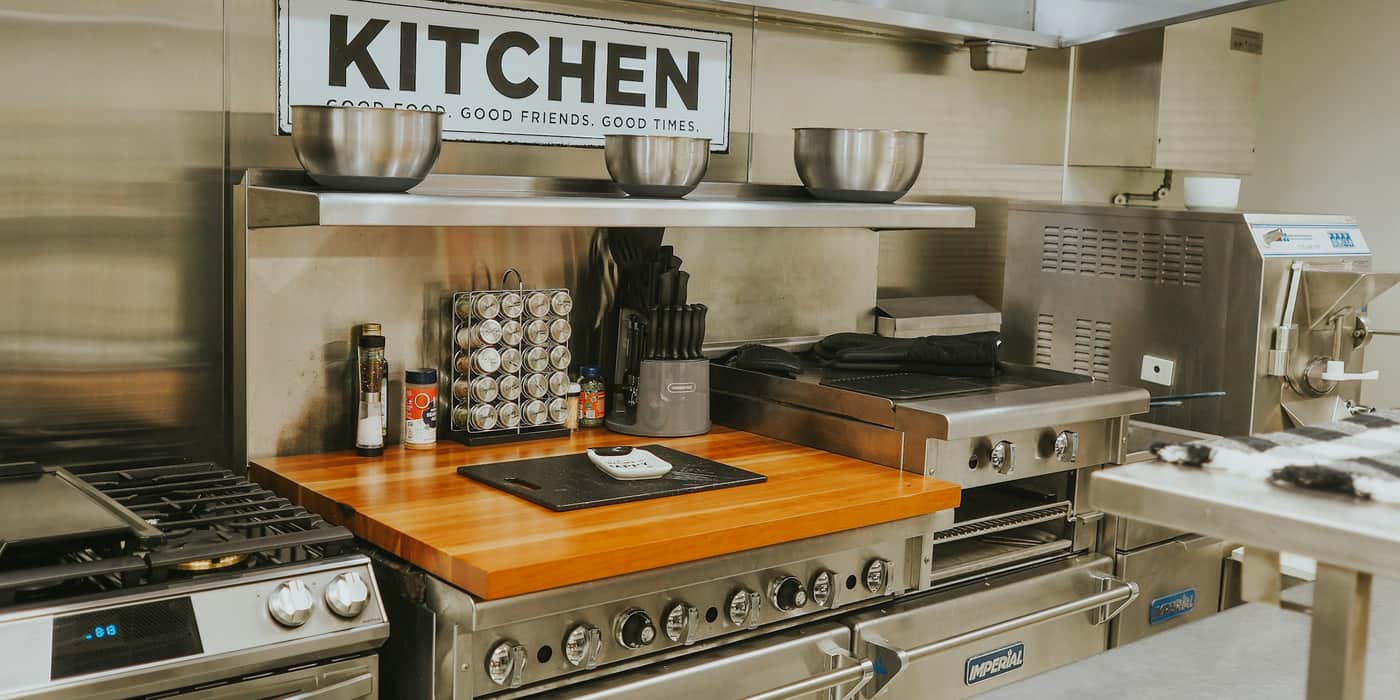
Why will my proofer not hold heat and humidity?
A proofer that will not hold heat and humidity usually has a dead heating element, a drifted thermostat, a humidistat that no longer reads correctly, or a steam or water system that is scaled, empty or not delivering moisture. A proofer needs warmth and moisture at once, or the dough does not rise on schedule.
How a bakery oven and proofer fails and gets repaired
Bakery equipment fails on a clock. Dough is proofing, the oven is loaded, and a bakery is working against the hour the shelves open. A sheeter that jams, a rack oven that will not rotate, or a proofer that stays cold and dry puts the entire morning behind. Because the work is scheduled so tightly, we ask about timing when you call and see where the visit can be placed around the bake.
We repair proofers, rack ovens, deck ovens, dough sheeters and bakery mixers at your location. The failures are specific to the equipment: moisture and temperature in a proofer, a rack lift and steam system on a rack oven, stones and elements in a deck oven, rollers and guards on a sheeter, gearboxes on a mixer. A mixer on its own is also covered under commercial mixer repair, and ovens that bake pizza are dealt with under pizza oven repair. Refrigerated bakery cases belong on the display case page.
Bakery oven and proofer complaints, causes and corrections
| Complaint | Likely cause | Correction |
|---|---|---|
| Proofer stays cold, or heats but has no humidity | An element or the thermostat has failed, or the moisture source has stopped: an empty water pan, a scaled steam generator, a stuck fill valve, or an atomizer that is clogged. | The technician checks which of the two systems is down, then replaces the element, thermostat, humidistat, fill valve or descales the generator. Both temperature and humidity are measured before the cabinet goes back to work. |
| Dough skins over or collects drips on the ceiling | Humidity is too low and the dough surface dries, or it is too high and moisture condenses on the roof and drips. The humidistat or its sensor has drifted, or a water heater is running too hot. | We check the sensor against a calibrated reading, recalibrate or replace it and correct the setpoint. Drips on dough also get the door gasket and cabinet ventilation checked. |
| Rack oven rack will not rotate or stops mid-bake | The rack drive motor, the gear reduction or the lift mechanism has failed, or the rack hook is out of alignment. A rack that sticks mid-bake causes burned and raw trays in one load. | The technician inspects the drive coupling, motor and lift, then replaces or realigns the failed part. Racks with bent wheels or hooks are corrected too, because they can cause the original fault to come back. |
| Rack oven bakes unevenly front to back | A combustion blower or circulation fan is weak, a burner is not firing evenly, or the heat exchanger or chamber has air leaks at the door gasket. | We measure chamber temperatures in several positions, repair the fan or door seal. Burner, ignition and gas valve faults are tested by the technician; building gas piping goes to a gas contractor. |
| Deck oven bottoms burn, or one deck stays cool | On an electric oven the lower element for that deck has failed or its thermostat is out of calibration. On a gas deck the burner or ignition control is the likely fault. Cracked stones also shift heat. | The technician tests each deck's elements and controls separately and replaces the failed part. A cracked or heaving stone is replaced rather than patched. |
| Steam injection weak or constant | The steam solenoid valve is stuck open or closed, the water inlet is restricted by scale, or the steam chamber is fouled. In a rack oven, the steam generator lacks heat because of a scaled element. | We clean or replace the solenoid, descale the steam components and test the cycle timing. Hard water makes this recur, so we discuss water treatment where it applies. |
| Sheeter belt wanders, rollers will not adjust, or the machine will not start | A belt has stretched or worn and tracks off, the roller adjustment mechanism is dry or damaged, or a guard interlock switch is not engaging, which keeps the motor from starting. | The technician re-tracks or replaces the belt, lubricates and repairs the gap adjustment and adjusts or replaces the interlock switch. The guards and interlocks stay in place. |
| Spiral mixer slows or stalls under stiff dough | The bowl-drive or dough-hook belt is slipping, one speed of a two-speed motor has failed, or the gearbox oil has broken down or leaked. Loading more dough than the mixer's rating gives the same symptoms. | We check the hook and bowl drives and the two-speed motor, replace the failed part and refill the gearbox with the correct lubricant. Batch weight is compared with the mixer's rating. |
| Spiral mixer will not start or the bowl will not turn | A bowl-guard interlock switch is worn, misaligned or damaged by washdown, so the circuit does not see the guard as closed, or the contactor that runs the bowl drive has worn. | The technician tests and replaces the switch or contactor and adjusts the guard so it activates properly. A bypassed interlock on a mixer is never left in place. |
Before you call about a bakery oven and proofer
- Check the water supply valve to a proofer or steam oven is open and the water pan or reservoir has water, and look for scale on the visible part of the pan.
- Confirm that the breaker for the unit is on, and reset a tripped breaker only once.
- Make sure a proofer or oven door gasket is intact and the door closes completely, with no tray or rack edge propping it open.
- On a sheeter or mixer, look at the guard and the bowl for dough or flour packed into the interlock area and clean it with the unit switched off at the disconnect.
- Read the display or panel and write down any code, then record what the unit was doing when the fault appeared, since a stall under load and a stall at idle point to different causes.
Stop at gas valves, 208, 240 or 480 volt wiring, sealed refrigerant circuits, steam under pressure and anything live. Those are a call.
How we diagnose a bakery oven and proofer
Establish what the bake schedule needs
We find out which product is affected and what must run first, so the repair order fits the work you have to turn out.
Measure temperature and humidity or chamber heat
Calibrated probes read the proofer or oven at several points, which separates a control fault from an element, fan or gasket fault.
Test the moisture and steam system
Fill valve, steam generator, solenoids and spray nozzles are checked for flow and scale, because moisture failure is often a plumbing-side problem.
Check drives, motors and safety switches
Rack drives, sheeter belts and mixer gearboxes are run and listened to, and interlocks are tested to confirm they open and close the circuit properly.
Run a proof of the repair
The unit is brought to working temperature or run under load and re-measured. Burner, ignition and gas valve faults are tested by the technician; building gas piping goes to a gas contractor.
Parts that fail most on bakery ovens and proofers
- Heating elements and thermostats
- Provide the heat in an electric proofer or deck oven, and fail from age and thermal cycling.
- Humidistat and sensor
- Tell the proofer when to add moisture, and drift or foul with flour dust and steam.
- Steam solenoid and fill valve
- Meter water to the generator or oven chamber and stick closed or open with scale.
- Rack drive motor and gear reducer
- Turn the rack in a rack oven and wear under heat and load.
- Sheeter belt, scraper and roller bearings
- Wear under flour and dough, which brings tracking and gap problems.
- Mixer gearbox, belt and start capacitor
- Carry the load of stiff dough and fail under overload.
- Door gaskets and interlock switches
- Seal heat and moisture in ovens and proofers, and keep guards honest on sheeters and mixers.
Bakery ovens and proofers we repair, by type
- Proofer and proofer-holding cabinet
Reach-in or roll-in cabinets that make warm, humid air for yeast dough. Water supply, heat and humidity control all have to work together.
- Rack oven
A rack of trays rotates inside the baking chamber while burners or elements heat and a steam system adds moisture. The rack rotation and steam system are the extra repair points.
- Deck oven
Stacked decks of stone or steel with separate top and bottom heat. Cracked decks, failed elements and steam injection faults are typical.
- Dough sheeter
Rolls dough through adjustable rollers and a belt. Belt wear, roller gap, scrapers and guard switches are the repair items.
- Bakery mixer
Spiral or planetary mixers that work stiff dough. Gearboxes, bowl drives, timers and interlocks carry the repairs.
What decides the cost
- Which system failed: a gasket or switch is quick, while a rack drive, a steam generator or a mixer gearbox is a larger repair.
- Water quality. Hard water scales steam and humidity parts, and a descale before replacement can save the part or confirm it is dead.
- Whether the gas side is involved. Burner, ignition and gas valve faults are tested by the technician, and only a fault in building gas piping brings in a gas contractor.
- How well the unit has been cleaned. Flour and dough buildup in drives, switches and fans can add faults to the original one.
- Parts lead time for imported or older machines, and whether the repair must be timed around your bake schedule.
Repair or replace the bakery oven and proofer?
Bakery equipment is built heavy and many machines are worth keeping for decades, so repair is the normal choice for gaskets, switches, belts, elements, steam parts and drives. Replacement enters the discussion when a deck oven's frame has warped, a mixer's gearbox is worn throughout, or a proofer cabinet has corroded through. Weigh the written price against the cost of downtime during a bake day, and use the repair or replace guide to compare. If the oven's output limits what you can bake, that is a capacity question rather than a repair question.
Bakery ovens and proofers by brand
Related to bakery oven and proofer repair
Related repairs
Where it matters most
Where we repair bakery ovens and proofers
- Bakery oven and proofer repair in Golden Valley, MN
- Bakery oven and proofer repair in Hastings, MN
- Bakery oven and proofer repair in Hudson, WI
- Bakery oven and proofer repair in Inver Grove Heights, MN
- Bakery oven and proofer repair in Lakeville, MN
- Bakery oven and proofer repair in Maple Grove, MN
- Bakery oven and proofer repair in Maplewood, MN
- Bakery oven and proofer repair in Minneapolis, MN
- Bakery oven and proofer repair in Minnetonka, MN
- Bakery oven and proofer repair in New Brighton, MN
- Bakery oven and proofer repair in Oakdale, MN
- Bakery oven and proofer repair in Plymouth, MN
Other cooking equipment repairs
Questions about bakery ovens and proofers
Why does my proofer drip onto the dough?
A proofer drips onto the dough because condensation forms when the cabinet is too humid or the ceiling surface is cooler than the air. A drifted humidistat is a common cause, and a door that does not seal lets cold air meet moist air at the ceiling.
How do I know whether a deck oven stone is cracked or just worn?
A hairline craze on a deck oven stone is normal wear. A crack that opens up, a stone that lifts at an edge, or a spot that bakes cold or burns the bottom of the loaf above it means the stone needs replacing, not patching.
What does the steam system on a rack oven do?
A rack oven's steam system adds moisture at the start of the bake so the crust stays elastic while the loaf finishes rising and then sets. Without enough steam, the crust turns out thick and pale, or it tears in the wrong places on the loaf.
Is it safe to run a sheeter with the guard open?
No, it is not safe to run a sheeter with the guard open. The guard and its interlock exist to stop the rollers whenever a hand could reach them. If the switch is not working, the machine should not be used at all until it has been repaired and tested.
Why does my spiral mixer slow down with large batches?
A spiral mixer slows with large batches when it is overloaded relative to its rated dough capacity, or when a drive belt, clutch or the start capacitor is weak. We check the drive and gearbox and compare your usual batch weights with the rating on the plate.
Can hard water damage a proofer?
Yes, hard water can damage a proofer. Scale builds up on steam generators, fill valves and water pans, which restricts humidity output and shortens the life of the parts. How quickly it happens depends on the water supply at your building.