
Coffee shop and cafe equipment repair in Minneapolis and Saint Paul
Coffee shop equipment repair on site in the Twin Cities: espresso machines, grinders, brewers, ice machines and milk coolers.
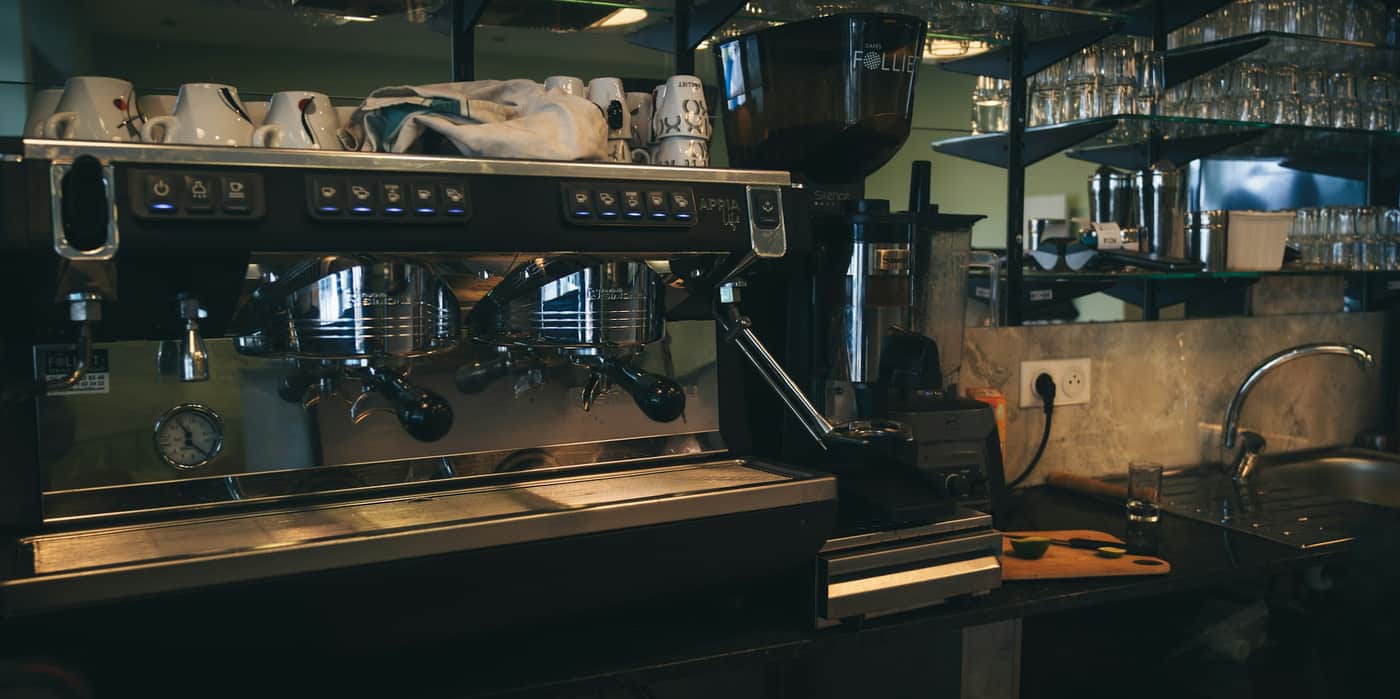
What is the most common equipment problem in a coffee shop, and how is it fixed?
Scale and wear on the espresso machine, grinders that drift out of calibration and ice machines that slow down are the usual culprits. Water quality drives many of them. We repair espresso machines, brewers, ice makers and coolers on site and give you a written price before any repair begins.
Coffee Shops: what is different
A coffee shop sells a small number of drinks very fast, so its equipment problems are about drink quality as much as breakdowns. A machine can be running and still produce sour espresso, a thin shot or lukewarm milk. Behind the bar sit a boiler, a pump, a grinder and a water filter, and the dairy fridge and ice machine that make every cold drink possible. A change in the cup usually appears before a machine actually stops.
We repair espresso machines and grinders, commercial coffee brewers, ice machines and the reach-ins and cases that hold milk and pastries, plus the microwaves and sandwich equipment behind the bar. We diagnose on site, tell you what is scale, wear or adjustment, give you a written price to approve before work starts, and plan around the morning rush where the schedule allows. Tell us the machine's model and how its shots or steam have changed.
What shapes a repair visit here
The morning rush decides the day
Most coffee shops earn a large share of their sales between opening and mid-morning. If the espresso machine or grinder fails at seven, those sales are not recovered later. That makes the opening hour the worst time for a fault and the best time to catch a weak one. We ask whether the machine behaves differently from the first shot of the day to the fortieth.
Water decides the life of the machine
Espresso boilers, group heads and brewers all heat water, and mineral scale builds on every heating surface. Scale shows up as slow recovery, weak steam, clogged valves and short element life. A shop with an unmaintained filter can be building scale every day. We look at the water supply and filter before replacing a part that scale will damage again.
Quality complaints before breakdowns
A coffee shop notices a change in the cup before it notices a failure: shots that run fast, steam that is wet, brewed coffee that tastes flat. Those are the early signs of a pressure, temperature or grinder-burr problem. Report them early, because a small adjustment or a worn part is easier to deal with than a machine that has stopped.
Small footprint, tight space
Cafes pack a boiler, grinders, a refrigerator and an ice machine into a narrow bar. Heat from the machines and restricted airflow around condensers cut performance, and access to the back of a unit can mean moving counters. We plan the visit with the layout in mind and tell you what must be pulled out.
Milk is the food-safety item
In a coffee shop, milk is the item most likely to be time and temperature controlled. A reach-in that warms overnight or a fridge that cycles badly puts the dairy at risk, and that is the call to make first. We check box temperature, the gasket and the condenser, and you decide what to keep.
Equipment that matters in coffee shops
- Espresso Machine Repair
The espresso machine is the product. Loss of pressure, a weak boiler or a leaking group gasket changes every shot, and a machine that is down stops most of the menu.
- Commercial Coffee Brewer Repair
Batch brewers and airpots carry the volume drip coffee, so a heating or dispensing fault leaves you serving from a thermos.
- Ice Machine Repair
Iced drinks run on ice, so a machine that slows in warm weather limits what you can sell.
- Reach-In Refrigerator Repair
Milk and cream are the most important cold items in a coffee shop, and an undercounter unit that warms spoils product quickly.
- Display Case & Merchandiser Repair
A pastry or grab-and-go case is a sales tool, and a case that fogs or runs warm hurts presentation and food safety.
- Refrigerated Prep Table Repair
Cafes that make sandwiches or breakfast items rely on a prep rail for fillings, and a rail that drifts warm affects the whole sandwich menu.
- Commercial Microwave Repair
Breakfast sandwiches and pastries are often reheated, and a microwave with a weak magnetron adds time to the line.
- Glasswasher Repair
Shops that serve in ceramic or glass have a small machine that must keep up through the morning rush.
Fitting the visit around the operation
Coffee shops are busiest early, so a repair is easiest in the afternoon after the rush or on a day you are closed. Some work, like descaling an espresso boiler or testing an ice machine, takes time and may need the unit off. If the espresso machine fails before an opening, tell us the model and the symptom, and say whether a second group or a batch brewer can carry the first hour.
Inspections and food safety
Milk and cream are held at 41°F or below under Minn. Rules 4626.0395, which makes the undercounter and reach-in fridges behind the bar a compliance item. Ice that goes into customers' drinks is treated as food, so keep the scoop out of the bin. The FDA Food Code (5-205.13) also expects a water treatment device, such as the filter ahead of your espresso machine, to be inspected and serviced on the maker's schedule, so a spent cartridge is something an inspector can note. Cafes in the Wisconsin river towns follow Wisconsin's food code and their own licensing agency.
More equipment that matters in coffee shops
Brands we see most
Guides
Other kinds of operation
Coffee Shops questions
My espresso shots suddenly run fast and thin. What do I check?
An espresso shot that suddenly runs fast and thin most often comes from the grind or dose, so check those first. If those are right, a pump pressure problem, a worn group gasket or a failing grinder burr is next. A technician reads the pump pressure at the group head to separate those causes.
Why does steam from my espresso machine go weak?
Weak steam on an espresso machine usually points to scale in the boiler or steam valve, a failing heating element, or a clogged steam tip. Hard water makes it more likely. We check boiler pressure and element operation, and tell you if descaling or a water filter is needed.
Does a water filter really matter for a coffee shop?
Yes, water filtration and softening matter for a coffee shop because they reduce scale in the boiler, valves and brewers, and they affect taste. A spent or wrong filter lets scale build up and shortens the life of parts. We ask about your filter and its replacement date at a visit.
Our batch brewer makes coffee but the water is not hot enough. Why?
A batch brewer that makes coffee without hot enough water most often has a failed heating element, a bad thermostat or limit switch, or a scaled tank. Low water temperature gives weak, sour coffee. We measure the brew water temperature and check the tank before replacing parts.
The milk fridge under the bar reads fine but the milk spoils early. What is going on?
A milk fridge can read fine and still spoil milk because its thermostat may sample air near the evaporator, which can read colder than the product. A weak fan or a worn gasket can warm the shelves while the display looks fine. Check with a thermometer in a milk container, and call us if it is above 41°F.