
Espresso machine not reaching pressure: what is wrong and who fixes it
Espresso machine gauge stuck low or shots running fast? Pump, water, valve and grind causes, and which checks are safe for staff.
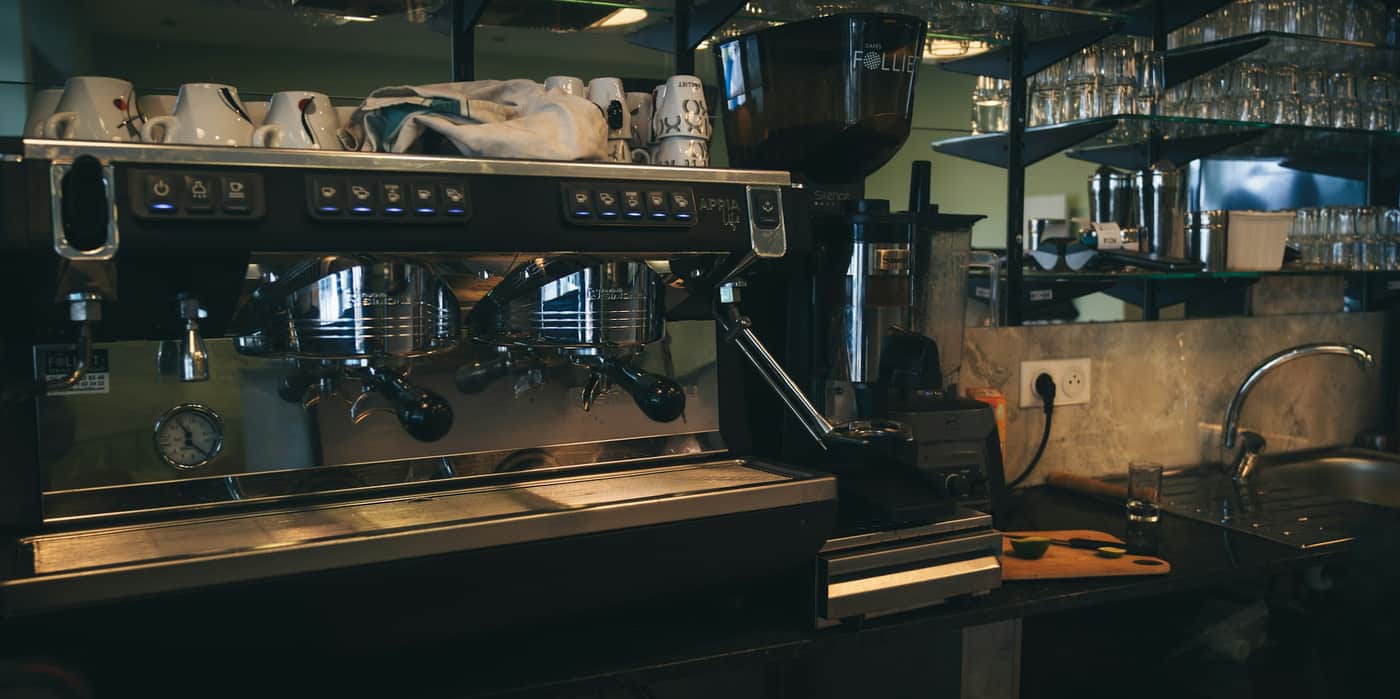
Why is my commercial espresso machine not building brew pressure?
Brew pressure comes from the pump pushing water against the resistance of the coffee puck. Low pressure means the pump is starved of water, the pump is worn, a pressure valve is leaking, or the grind offers no resistance. Check water supply and grind first, then call for a pump and valve test.
What pressure is the gauge actually showing?
Most commercial machines have two gauges or one gauge with two needles, and mixing them up sends people down the wrong path. One reads boiler pressure, which is the steam side of the machine. The other reads pump pressure, which is the water pressure delivered to the group head while a shot is running. When a customer says the machine has no pressure, the first question is which needle moved.
Pump pressure is not a fixed property of the machine. A pump is a source of flow, and pressure appears only when that flow meets resistance. The resistance is the compressed coffee in the basket plus the small restrictions in the group. That is why the needle rests low with a stopped group, climbs when you start a shot, and sits lower than usual if the coffee is ground too coarse or the basket is under-dosed. A reading of around 9 bar at the group while water flows through coffee is the common target on espresso machines, though the exact setting is the manufacturer's call and is made by a technician, not by feel.
Which causes belong to the barista and which need a technician?
Some low-pressure complaints are a grind or dosing problem, and a technician cannot fix those with a wrench. Our espresso machine repair calls often start this way. Others are mechanical and nothing you do at the grinder will change them. Sort the symptom first.
If a freshly adjusted grind brings pressure back and the shot looks normal, the machine is fine. If pressure stays low with a tight grind, a full basket and a fresh puck, the water path is the problem. The table below goes from the cheapest thing to check to the most involved.
| What you see | Likely cause | Who deals with it |
|---|---|---|
| Low pressure and fast, watery shots only on one grinder setting | Grind too coarse, basket under-dosed, worn basket or worn burrs | Barista, then grinder service |
| Pump sounds loud, strained or runs dry; no water from the group | Water tank empty or not seated, supply valve closed, clogged inlet filter or water filter cartridge | Operator for supply and tank checks |
| Pressure low on every group, pump sounds normal | Pump wearing out, or pressure valve set low or leaking | Technician |
| One group low, others fine | Restricted or leaking group solenoid, blocked flow restrictor, scale in that group | Technician |
| Needle slowly drifts up when no shot is running | Expansion valve stuck or set high, or incoming water pressure too high (no regulator) | Technician |
| Steam boiler needle low, weak steam wand, no water heating | Heating element, pressure control or level probe problem | Technician, power off first |
How does the pump fail?
Two pump types turn up in commercial machines. A vibration pump uses an electromagnet to drive a small piston and is common on smaller and lighter-duty machines. A rotary vane pump uses a motor that spins a vaned rotor and is common on heavier group machines. Both can lose output, but they fail differently.
A vibration pump that is wearing out buzzes harder, pushes less water and runs hot, and its pressure often falls further as the day goes on. A rotary pump usually keeps working until its coupling, motor or vanes wear, and then pressure drops across the board. Either pump can also look weak when the real fault is upstream: a plugged inlet screen, a collapsed hose or an exhausted water filter starves it. A tech reads the pump's output at the group with a test gauge, and that one reading separates a worn pump from a feed problem in a few minutes.
What do the pressure valves do, and how do they go wrong?
A pump left alone will push far more pressure than coffee needs, so machines carry a valve that holds back the excess. Depending on the model it is called an over-pressure valve or an expansion valve, and it opens at a set pressure and vents the extra back to the tank, the pump inlet or the drain, depending on the model. Two things go wrong with it. Scale or a tiny piece of debris holds it slightly open, so the pump loses pressure to the bypass and the gauge never climbs. Or someone has turned its adjustment screw to the wrong setting.
Do not adjust the screw to chase a number. On a rotary-pump machine the bypass and the expansion valve interact, and a wrong setting can send the gauge past safe limits for the boiler fittings. Pressure setting is a tech job done with a gauge in hand. Brewers and other coffee equipment are covered under commercial coffee machine repair, and machines from La Marzocco and Nuova Simonelli follow the same pump-and-valve logic. If you need the model and serial for the call, the guide on finding your model and serial number shows where the plate sits.
Scale is behind many of these faults. Hard water leaves deposits in solenoid valves, restrictors and the valve seats, and a water softener or filter cartridge past its service date lets hardness through. Whether your supply needs treatment depends on your building's water, so ask your tech what the inside of the group valves look like when they are opened.
How does the tech find the fault?
The first move is to learn what kind of water feed the machine has: a tank you fill by hand or a direct line from the building supply, usually through a filter and sometimes a regulator. The tech checks the feed pressure and flow before touching the machine's own parts, because a weak feed will fool every later test.
Next comes a gauge on the group, then the pump tested alone, then the valves. If the pump is fine and a valve is leaking, the repair is a rebuild or replacement of that valve. If the pump is weak, it is replaced along with its inlet filter. Scale gets removed from whichever parts hold it, and the descaling plan is changed so it does not return.
Steam-side faults need extra care. The boiler stays under pressure and hot after the machine is switched off, so a tech depressurizes it and lets it cool before opening any fitting. An operator should never loosen a fitting on a hot machine.
How do you keep it from coming back?
Most pressure problems trace back to the same few habits: filter cartridges run past their date, backflushing skipped on busy weeks, and group gaskets and shower screens left until they leak. Backflush with the detergent your machine's manual calls for, on the schedule the manual gives, and replace the group gasket and shower screen when they harden or clog.
A log of the pump gauge reading on a normal shot, written when the machine is healthy, gives a tech a baseline. Pressure that was steady for months and then slips by a visible amount is much easier to trace than a machine nobody has measured before.
A safe sequence to follow
Read the right gauge
Watch the pump gauge, not the boiler gauge, while a shot runs. Note what it reads on a normal shot and what it reads now.
Check the water feed
On a tank machine, confirm the tank is full and seated. On a plumbed machine, confirm the supply valve behind the machine is fully open and the water filter cartridge is within its service date.
Run a normal test shot
Use a correctly dosed, tamped basket with a known-good grind. If pressure comes up and the shot looks right, adjust the grinder and stop there.
Compare the groups
Run a shot on each group. One low group points to that group's valve or restrictor; all groups low points to supply, pump or pressure valve.
Look for leaks
Check for water dripping from the machine or into the drip tray when no shot is running. Do not open panels on a machine that is powered or hot.
Photograph the nameplate and gauges
Take pictures of the data plate and both gauges mid-shot so the tech starts with the facts.
When to stop and call
- Pump pressure stays low with a tight grind, a full basket and a full water supply.
- The pump sounds strained, buzzes harder than normal, or runs and delivers no water.
- The gauge climbs by itself when no shot is running.
- The steam boiler gauge is low or does not rise, or the machine trips its breaker when it heats.
- Any fitting weeps water or steam, since steam-side parts must not be tightened by hand.
Questions about this problem
What pressure should a commercial espresso machine run at the group head?
A commercial espresso machine usually runs at around 9 bar at the group head while water is flowing through coffee, which is the figure most manufacturers and cafes work toward. The correct setting for your machine is in its manual, and it is measured with a gauge at the group, not guessed from the dashboard needle.
Can the grinder cause low pump pressure?
Yes, a grinder can cause low pump pressure, because the pump needs resistance, and coarse grounds or a thin dose offer almost none, so shots run fast and the needle stays low. If tightening the grind restores pressure and good extraction, the machine is healthy and the grinder or its burrs need attention.
Is it safe to adjust the pressure screw myself?
No, you should not adjust the pressure screw on an espresso machine yourself, because the pump pressure setting works with a bypass valve, and a wrong adjustment can overload the pump, the hoses or the boiler fittings. Have a technician set it with a test gauge on the group.
Why does only one group on my machine run low?
A single low group on an espresso machine points to something local, because the pump and boiler are shared: a group solenoid valve that is scaled or leaking, a blocked flow restrictor, or a clogged shower screen. The fix is usually cleaning or replacing that valve or restrictor.
Does a water filter really affect pressure?
Yes, an espresso machine water filter affects pressure, because a clogged cartridge starves the pump inlet, so pressure looks low even though the pump is fine. An exhausted cartridge also lets hard water through, which scales the valves and restrictors over time. Replace it on the schedule the filter maker gives.