
Pitco fryer repair in the Twin Cities
Pitco gas and electric fryer repair on site in Minneapolis, Saint Paul and 30 miles out: pilots, thermostats, filters and burners. Written price first.
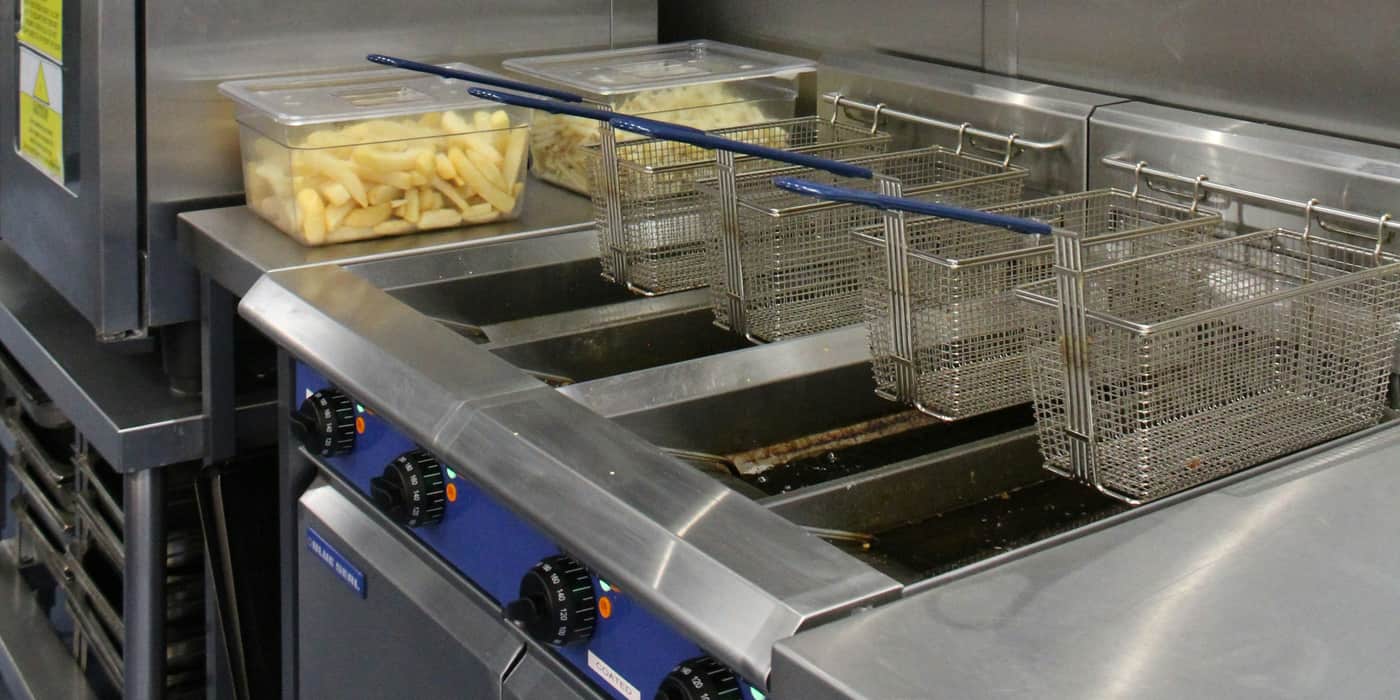
Why will my Pitco fryer not hold temperature or stay lit?
On a Pitco gas fryer the usual culprits are a weak thermopile or dirty pilot on millivolt models, a failed thermostat or high-limit, a clogged flue, or a tired gas valve. Electric Solstice fryers more often point to a contactor, element or probe. The control type decides the order of tests.
Pitco fryers
Pitco is a fryer specialist. Its Frialator design, with a cold zone below the heating tubes where crumbs settle instead of burning in the oil, has been the brand's calling card. Middleby owns the brand through its cooking group. Gas and electric Solstice fryers, reduced-oil-volume fryers and rethermalizers are the core of the catalog today. In the Twin Cities you see them in pizzerias and bars frying sides, fish fry kitchens, school cafeterias and quick-service counters.
Because Pitco builds both simple and computerized fryers, the first question on a call is which one you have. A basic gas model with a standing pilot and a thermostat is a mechanical diagnosis. A Solstice with a digital controller and electronic ignition is a sensor and board diagnosis. Both ends of the line are covered by commercial fryer repair, and symptoms such as a cold fryer or a pilot that dies are worked through in the fryer pilot guide.
Reading the plate on Pitco fryer
Pitco fryers carry a rating plate that gives the model, serial number and fuel type. Look on the inside of the door or cabinet front or the side panel of the fryer. Note the fuel (natural gas or LP), the voltage for electric units and the controller on the front. A photo of the plate and a photo of the controller get the right parts specified before we arrive.
Pitco gas floor fryers
Equipment guide
Seen on this line: Pilot goes out or will not stay lit / Oil runs hot or slow to recover / Burner flame lifts or carbons the tubes
Gas Pitco fryers heat a fry pot with burners firing into tubes that run through the oil, with the cold zone sitting below. Many basic models run on a millivolt system: a standing pilot heats a thermopile, which powers the gas valve with no outside electricity. When the thermopile weakens or the pilot flame is dirty or blown around by a draft, the valve drops out and the fryer goes cold. A thermostat that drifts leaves the oil too hot or too cool, and the high-limit is the backstop that should shut gas off if it runs away. Heat exchanger tubes also foul with carbon on the flue side, which cuts recovery. Gas valves, pilot assemblies and any gas connection are work for a technician, so shut the fryer down and call.
Pitco Solstice and electric fryers
Equipment guide
Seen on this line: Display climbs, oil does not / Probe or high-limit failing / Filter pump weak or drain valve sticking
Solstice units are modular, gas or electric, and often run a digital or OneTouch controller. Electric models use heating elements, a contactor and a temperature probe with a high-limit. If the fryer shows heat on the display but the oil never climbs, the contactor, an open element or a tripped limit is likely. A failed probe reading wrong can make the controller believe the oil is hot when it is not. Solstice also supports a filter option, the SoloFilter, and its pump, filter paper, pan seals and drain valve handle oil hard every day. A pan that leaks or a drain valve that sticks is a safety problem as much as a service one, and we handle oil movement carefully.
Pitco reduced-oil-volume fryers and rethermalizers
Equipment guide
Seen on this line: Thermostat reading off by a wide margin / Rethermalizer water level or fill fault / Scale on tubes or elements in the tank
Reduced-oil-volume fryers use less oil per batch, which makes them more sensitive to oil condition and thermostat accuracy: there is less oil to buffer a mistake. Burned or darkened oil quickly hides a bad thermostat, so we test with a calibrated thermometer rather than trusting the dial. Rethermalizers are water-bath units used to reheat packaged or pre-cooked product, so they fight scale and dry-fire rather than oil. Their thermostat, heating elements or burner tubes, fill and drain controls, and water level are the usual suspects. Scale builds in the tank and the burner tubes of a rethermalizer exactly as it does in a steam kettle, and descaling is part of any thorough repair.
Sourcing parts for Pitco fryer
Pitco parts are matched to the fryer's gas type, size and controller. A thermostat, thermopile, gas valve or probe from one model may not fit another, and gas conversions need the right orifices. Digital boards and the OneTouch controller are proprietary. We identify the model first, then source OEM or verified equivalent parts. We quote the repair in writing before work begins and give general lead-time expectations only once we know the part.
More Pitco equipment: cooking equipment and cooking equipment
Same owner: The Middleby Corporation
Compared with
More cooking equipment brands
Questions about Pitco equipment
What is the cold zone on a Pitco fryer for?
The cold zone on a Pitco fryer is the quiet area of oil below the heating tubes where crumbs and sediment settle. Because that oil is cooler, debris does not burn and darken the whole pot. Skimming and filtering still matter, and a dirty cold zone shortens oil life.
Why does my Pitco pilot go out when the exhaust fan is running?
A Pitco pilot goes out when the exhaust fan runs because a strong draft from a hood or make-up air can disturb the pilot flame. A weak thermopile also drops out under the slightest disturbance. We test the thermopile millivolt output and the pilot position, and we look at the room's air balance.
Can I switch a Pitco gas fryer between natural gas and propane?
A Pitco gas fryer can be switched between natural gas and propane only with the correct conversion kit and a gas technician setting pressure and orifices. That work involves gas piping and valves. If you have propane and the unit was set up for natural gas, shut it off and call.
How can I tell if my Pitco thermostat is wrong?
You can tell a Pitco thermostat is wrong by putting a calibrated thermometer in the oil beside the sensor at a steady setpoint and comparing. If the oil runs well above or below the dial or display, the thermostat or probe is suspect. We run this test before replacing a gas valve.
Does a SoloFilter need special attention?
Yes, a Pitco SoloFilter needs regular attention to the filter paper or screen, the pump and the pan seal. A pump that groans or an oil return that slows often means a clogged filter or a worn seal. Do not move hot oil by hand, and call if the drain valve sticks.