
APW Wyott charbroiler and food warmer repair in the Twin Cities
On-site APW Wyott char-broiler and hot food well repair in Minneapolis, Saint Paul and the metro: pilots, regulators, thermostats and wells.
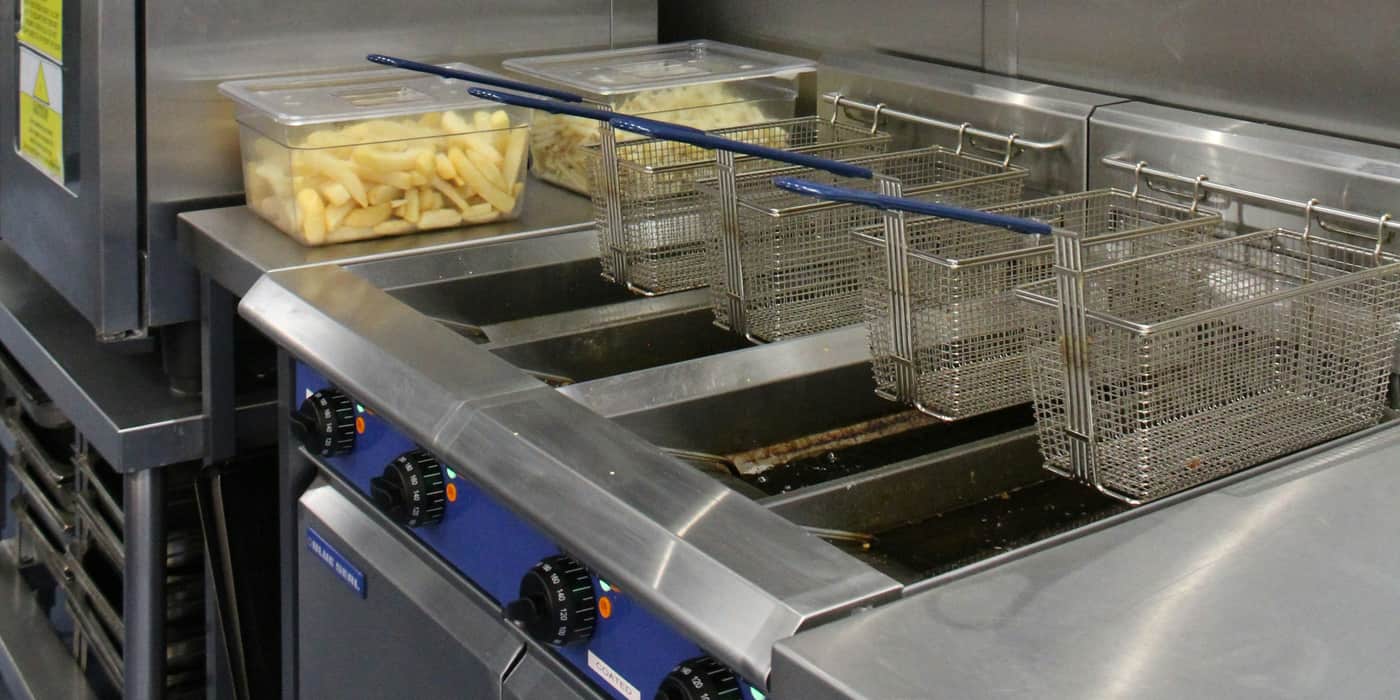
What goes wrong on an APW Wyott char-broiler?
On the HDCB heavy-duty gas char-broilers the usual faults are pilot and thermocouple trouble, a gas regulator whose vent cap is clogged with grease or dust, burner ports and air shutters packed with carbon, and radiants out of their slots. The maker tells owners to clean the regulator vent at least monthly.
APW Wyott charbroilers and food warmers
APW Wyott is a Middleby brand. Middleby's page says the company supplies equipment for cooking, toasting, heating and holding, warming and merchandising, and gives Smithville, Tennessee as its manufacturing site, with corporate headquarters at Middleby in Elgin, Illinois. In practice that means two very different families reach Twin Cities kitchens: gas char-broilers on cook lines, and electric hot food wells on serving lines, delis and convenience stores, each with its own failure habits.
Those families fail in different ways, and a technician treats them that way. A char-broiler's problems are burner, pilot and pressure problems that grease and carbon make worse. A hot food well is a thermostat, an element and a water level, so knowing which family you own settles the first question on the phone. Broiler basics are on charbroiler repair, and warming equipment on food warmer repair. The notes below come from APW Wyott's own manuals.
Reading the plate on APW Wyott charbroiler
On the HDCB and HDCRB char-broilers the data plate is on the right side panel, and the maker says to check that the gas type on the plate matches the supply. The hot food well manual points to the data plate for voltage and phase. Have the model, such as HDCB-2436i or HFW-4, the gas type or voltage, and whether the pilot is standing or safety-valve type on hand for the call.
APW Wyott HDCB and HDCRB heavy-duty gas char-broilers
Equipment guide
Seen on this line: Pilot out after the knob is released / Yellow-tipped flame from a dirty air shutter / Uneven heat from clogged burner ports / Regulator vent cap packed with grease
The HDCB series runs from the 24-inch HDCB-2424i through 36, 48, 60 and 72 inches, and the HDCRB models are the Charrock versions with rock grates in place of radiants. Each burner is rated 20,000 BTU per hour, and natural gas manifold pressure is 5 inches water column against 10 for propane. The units come with either a flame-failure pilot safety valve, lit by holding the knob in for 15 to 30 seconds so the thermocouple heats, or a standing pilot. The maker says the pilot should be as small as possible while still lighting the burners reliably. The regulator has a vent cap that must stay open, and burner ports and air shutters need to stay clean, since the air shutter is set to just remove the yellow tips from the flame.
APW Wyott HFW top-mount hot food wells
Equipment guide
Seen on this line: Well dry after the water boiled off / Thermostat knob out of step with the actual temperature / Capillary crushed or knocked off its clip / Leaking flange seal or drain strainer
The HFW-2 through HFW-6 wells, and the D versions with a drain, are electric wells that run on 208 or 240 volts and are designed to be run wet. The maker specifies hot water at 120 to 140°F in the well pan, a thermostat set to 10 or an infinite control set to 7, and a well that is never allowed to run dry. The thermostat versions use a capillary bulb thermostat in 36 and 72 inch lengths under a capillary cover, so a crushed or displaced capillary is a real fault. The well flange is sealed with putty tape and silicone at installation, and a failed seal leaks water toward the electrical compartment. The manual's own first checks are the power switch and a glowing pilot light.
Sourcing parts for APW Wyott food warmer
The wells publish exploded parts lists with item numbers for the well pan, drain strainer, capillary cover, 36 and 72 inch thermostats and knobs, so the thermostat length matters when ordering. Char-broiler orifices for propane ship in a bag tied to the valve, so a conversion starts from those. Valves are meant to be checked and lubricated periodically by a service agency, and cheap generic valves rarely carry the same flame-failure arrangement.
APW Wyott next to Garland and Wells
Same owner: The Middleby Corporation
More cooking equipment brands
Questions about APW Wyott equipment
How often should an APW Wyott regulator be cleaned?
The char-broiler manual says to blow dust and grease off the regulator's blue vent cap at least monthly, and more often in a greasy kitchen. If the openings under the cap are blocked, pressure varies, burners run poorly and the regulator can wear out early.
What is a Charrock broiler?
HDCRB models are the Charrock version of the HDCB series. They use rock grates in place of radiants, so the heat comes up through the rocks, which hold grease and carbon differently and need cleaning more often when sauces are heavy.
Can I run a hot food well without water?
No. The HFW manual says never to let the well run dry and to pour hot water of 120 to 140°F into the well pan, because wet operation keeps heat even and food in the safe zone. Dry heat can damage the well and the thermostat, and cold water poured into a hot dry well is flagged as unsafe.
Why does my APW Wyott pilot stay lit only while I hold the knob?
On a flame-failure valve the thermocouple has to heat before the valve holds open. If it will not hold after 15 to 30 seconds, the thermocouple, the pilot flame size or a draft is the usual cause. Gas valve and pilot work is for a technician, so shut off the gas and call.
Where is the data plate on an HDCB char-broiler?
The manual says the data plate is on the right side panel. It shows the gas type the unit was built for, which must match the supply. Propane units use different orifices and a higher manifold pressure than natural gas units, so the plate is the first thing to read.