
Gaylord ventilator and kitchen hood repair in the Twin Cities
Gaylord ventilator, vapor hood, AirVantage and exhaust fan repair on site in Minneapolis, St. Paul and nearby suburbs. Filters and controls.
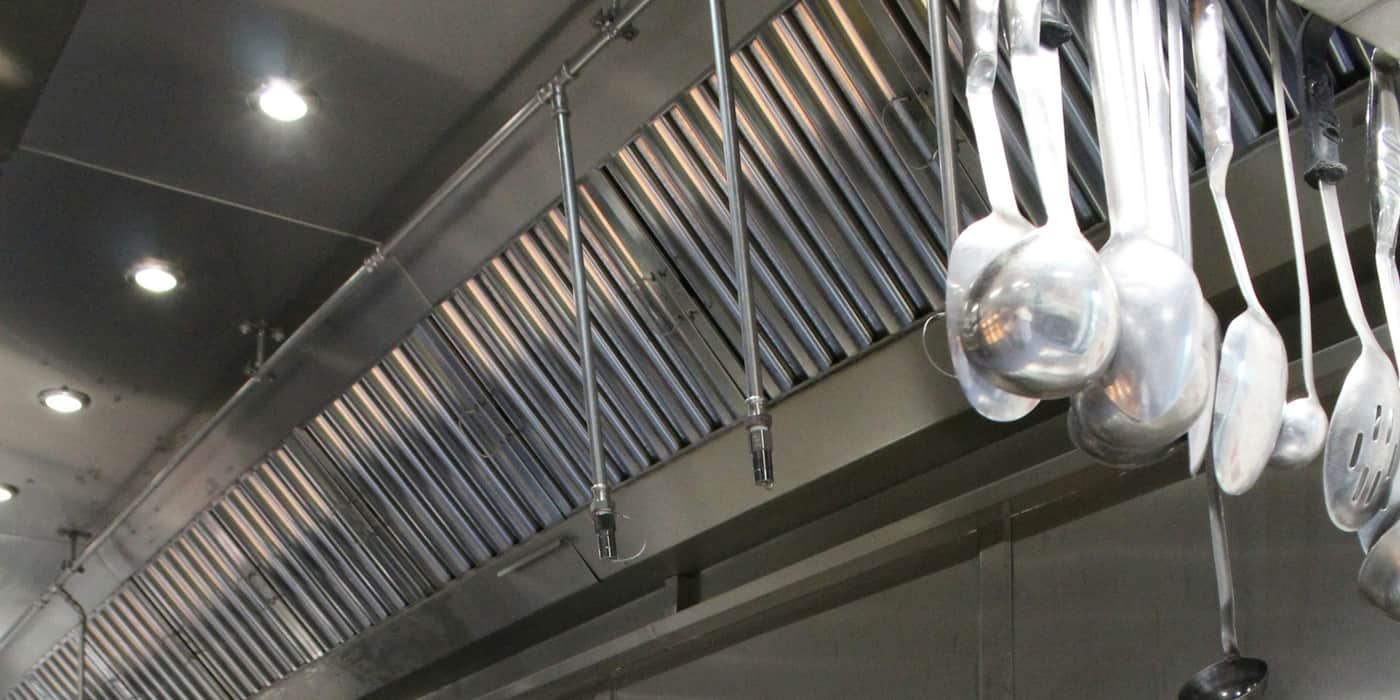
What goes wrong with Gaylord kitchen ventilators?
On a Gaylord, the brand-specific faults come first: moisture and corrosion in VH2 vapor hoods over dish machines, AirVantage sensors or drives that hold the fan at a reduced speed, and Eliminator smoke and odor units with fouled cells. Behind those sit the usual hood faults: loaded filters, tired fan belts and bearings, failed lights and weak make-up air.
Gaylord kitchen hoods
Gaylord Industries is part of the ITW Food Equipment Group, which also includes names such as Hobart, Vulcan and Wolf. The maker lists the EL, ELX and ELXC ventilators, the VH2 Vapor Hood, custom hood designs, AirVantage demand ventilation, the Eliminator smoke and odor control units and utility distribution systems. A Gaylord in the Twin Cities tends to be a purpose-built hood over a serious cooking line, often in hotels, hospitals and larger restaurants.
Because the name sits in the same corporate family as many cooking and dishwashing brands, a kitchen can have Gaylord above and a Hobart or Vulcan below. We repair the ventilation side, never the suppression or the grease duct, under our hood and ventilation service, and we leave the cooking line to the commercial kitchen equipment repair work, so one call can cover the hood above and a separate visit the equipment below.
Reading the plate on Gaylord kitchen hood
On most Gaylord hoods an identification label sits on the canopy, usually inside where the filters fit. Fans and controllers carry their own plates. Have the hood model such as EL, ELX or VH2, the serial number and any AirVantage controller details ready. Read the label with the cooking line off and cold and the filters removed. Do not climb onto the roof or into the hood; the technician reads the fan and controller plates on the visit.
Gaylord EL, ELX and ELXC ventilators
Equipment guide
Seen on this line: Filters loaded or damaged / Grease collecting at canopy corners / Lights failing in heat / Hood no longer matched to the equipment below it
The EL family are Type I grease hoods built to collect cooking effluent through filters and pass it to a duct and fan. Their field problems are consistent. Filters load with grease and begin to restrict airflow, panels around the canopy collect grease at corners, and the lights inside the hood fail from heat. When the cook line is changed and a new fryer or charbroiler replaces an older piece, the hood may be asked to do more than its design allows, which looks like a hood fault. We check what was installed beneath and whether the exhaust still matches it.
Gaylord vapor hoods and smoke control units
Equipment guide
Seen on this line: Moisture or condensation in a vapor hood / Corrosion where steam collects / Smoke or odor control cells fouled / Odor reaching the outdoors from the exhaust
The VH2 Vapor Hood is made for steam and heat above warewashing and similar equipment, not grease cooking. Its problems differ: condensation, moisture in light fixtures and corrosion where steam sits. The Eliminator units clean smoke and odor from exhaust air, and the maker lists versions with electrostatic ESP technology. Units like these have cells and filters that need service on a schedule, and the symptom of neglect is odor or smoke leaving the building. We repair what is serviceable and tell you when a cell or module needs the maker.
Gaylord AirVantage and exhaust fans
Equipment guide
Seen on this line: Fan stuck at reduced speed / Sensor reading wrong / Variable-speed drive faulted / Belt or bearing wear on the exhaust fan
AirVantage is the maker's demand control ventilation, which can reduce airflow to as low as 30 percent of the original design. With a system like that, a failed sensor or drive can keep the fan at a reduced speed while the cooks load the line, and the hood then smokes. The exhaust fans behind it have the same wear points as any belt-driven roof fan: belts, bearings, motors and greasy wheels. We read the control against the real cooking load, then check the drive and the fan, then confirm make-up air is keeping up.
Sourcing parts for Gaylord kitchen hood
Gaylord hood parts, filters, controllers and smoke control components are specific to the model, so we match them using the label rather than by appearance, and an AirVantage controller is matched to its fan drive. Motors, bearings and belts for the exhaust fan are standard sizes. The label details and a description of the failed part avoid ordering the wrong one.
Gaylord next to Halton and CaptiveAire
Compared with
Guides
More hoods and ventilation brands
Questions about Gaylord equipment
Is a Gaylord vapor hood the same as a grease hood?
No. A vapor hood is made for steam and heat over warewashing equipment, while a grease hood handles cooking effluent with filters. Mixing them up leads to wrong filters, wrong cleaning and wrong expectations of what the unit captures.
What does AirVantage do?
It is the maker's demand control ventilation, which can drop airflow to as low as 30 percent of design when cooking eases. If its sensor or drive fails, the fan can sit at the wrong speed, and a hood that smokes at the rush is the usual sign.
Why would a new fryer make my Gaylord hood smoke?
A hood is sized to the line beneath it. A larger or hotter replacement can ask more of the hood than its design provides. We check the exhaust, make-up air and the canopy against the new equipment before replacing parts.
Can you service the Eliminator smoke and odor unit?
We handle the fan, filters, controls and wiring we can reach and tell you when a cell, module or internal part needs the maker. Cleaning or replacement schedules depend on how much cooking passes through it.
How can I tell the Eliminator smoke and odor unit is fouled?
The signs are smoke or cooking odor leaving the exhaust outdoors, less airflow at the hood, or a unit that has not been cleaned on its schedule. On the ESP versions the collecting cells load with grease and lose their effect. We inspect the cells, filters and fan, and tell you when a module needs the maker.