
Kitchen hood not exhausting: belts, fans, filters and make-up air
Hood not pulling smoke, or the kitchen filling with heat? Belt, motor, filter and make-up air causes, plus what belongs to other trades.
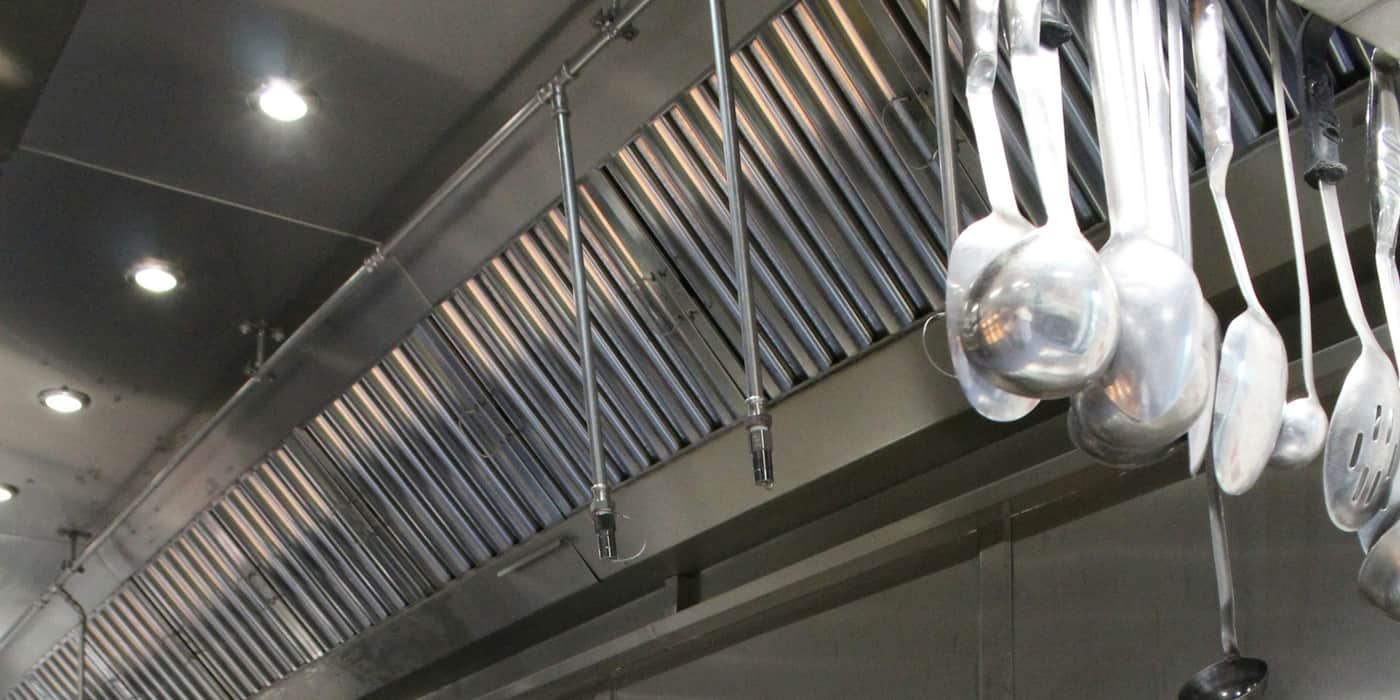
Why is my kitchen exhaust hood not pulling air?
A hood stops pulling for four main reasons: the fan is not turning at speed (broken belt, failed motor, tripped overload), the filters are loaded with grease, the duct is restricted, or the kitchen has no make-up air and is starved. A safe first check is the hood switch, the breaker and the filters.
Is the fan actually running?
Start with the simplest failure, because it is also the most common. Many hoods have a wall switch or a hood control panel, and some link the exhaust fan to the make-up air unit, so the fan will not start until the control is on. Stand under the hood with the switch on and listen. A running fan makes a steady roar you can hear at the filters and feel as a pull when you hold a sheet of paper near them. No sound and no pull means the fan is not running, and that is a power or motor problem, not an airflow problem.
Check the wall switch or control panel and the breaker that feeds the fan. If the breaker has tripped, reset it one time. If it trips again, stop. A motor that trips its breaker twice has a fault that will not go away, and forcing it can burn the motor or the wiring. The disconnect for a roof fan is usually on the roof or on the wall by the unit; do not climb to a roof to reach it.
What stops a fan that is turning?
Most restaurant exhaust fans on the roof are belt-driven, with a motor and a belt turning a fan wheel. A belt that has loosened, glazed or snapped gives you a fan that spins slowly or not at all while the motor hums. The motor may sound normal because it is turning freely, but the wheel is not moving the air. Worn pulleys, a loose set screw or a failed bearing give a similar result with a different noise: squealing, rumbling or a high whine.
Three-phase motors have an extra trap. If the wiring was changed after electrical work, the fan can spin backward. A backward fan still moves some air, so the hood pulls weakly and the kitchen fills with heat. This is a wiring fix done by a tech with the right test gear, and the fan's rotation arrow on its housing is the reference. Do not touch wiring yourself.
Overheated motors cut out on thermal overload, then reset themselves after cooling. If the hood works in the morning and fades during the afternoon, that pattern points at a motor or bearing running hot, a failing start or run capacitor on a single-phase motor, or a belt dragging more load than it should.
Could the filters or the duct be choking it?
Baffle filters catch grease. When they load up, airflow falls. You can check them without a tool: with the hood off and the cooking line cool, lift the filters out, look at them, and see how much grease is trapped. Heavily loaded filters go through the dish machine or a soak on your normal schedule. Swap in clean ones and test the hood again. If the pull comes back, the filters were the whole problem.
Filters are one part of the grease path. The plenum behind them, the duct and the fan housing also collect grease over time. A hood that was pulling well last month and is weak now, with clean filters, may have a restricted duct or a loaded fan. Cleaning the duct and fan housing to NFPA 96 is the job of a certified hood cleaning company, not a repair tech or kitchen staff. We service the fan, belts, motor, filters, lights and controls through our kitchen hood and ventilation service; the grease removal belongs to the cleaner. If the whole line is down with it, see commercial kitchen equipment repair and the equipment-down guide covers the first hour.
Is the kitchen being starved of make-up air?
An exhaust fan removes air, and the building has to replace every cubic foot it takes out. If the make-up air unit is off, tripped, frozen over in a winter cold snap or choked with dirty filters, the kitchen goes negative. The hood fights to pull air through a closed building, and you notice the effects: the back door is hard to pull open, doors slam shut, air whistles under a gap, the gas burners flicker and smoke rolls out the front of the hood instead of going up.
Many installations tie the make-up air unit to the exhaust fan so one starts the other. If the interlock fails, the exhaust runs without replacement air. Open a door briefly while the hood is running. If the pull improves immediately, you have a make-up air problem and not a fan problem. Do not leave a door propped open as a permanent fix: it lets in weather, pests and cold air, and it hides the real fault.
Balance matters in both directions. A kitchen that is too negative draws in air through any gap, including through flues of appliances. A technician checks the make-up unit, its filters, its heating section controls and its interlock with the exhaust fan before blaming the fan.
What is not part of a hood repair?
Two systems share the hood but belong to other trades. The fire suppression system, the nozzles, the tank and the fusible links or detection that trigger it, is inspected, recharged and repaired by a fire protection contractor. It also shuts off gas and electricity to the appliances when it fires. A tech who services the fan will not open or reset that system.
The other is grease cleaning of the hood, duct and fan. NFPA 96, the standard for ventilation control and fire protection of commercial cooking operations, sets how often the system is inspected and when it must be cleaned, and a hood cleaning company with the right certification handles it. If your hood is weak and the last cleaning was a long time ago, call the cleaner as well as the repair tech; many weak-hood calls end with both.
A gas smell in the kitchen means leaving the building first, then calling the gas utility or 911 from outside. If the suppression system has discharged, get everyone out and call 911 if there is or was any fire. Then call the fire protection contractor, and do not restart the line until the system is reset.
A safe sequence to follow
Turn the cooking line down
If the hood is not pulling, turn off the gas and electric cooking appliances under it until the airflow is back. Cooking under a failed hood fills the room with heat, smoke and combustion gases.
Check the switch and the breaker
Confirm the hood switch or control panel is on. Look at the breaker for the fan and reset it one time if tripped. If it trips again, leave it off.
Listen and test with paper
A running fan roars at the filters. Hold a sheet of paper near the filter bank; it should pull firmly against them.
Pull and inspect the filters
With the line cool and the hood off, remove the filters, check for heavy grease, and put in clean ones. Test the pull again.
Try the door test
Open a door while the hood runs. If the pull jumps, the make-up air is the problem. Close the door afterward.
Note what you saw
Write down when it started, what changed, and the sounds you heard, so the tech starts with the pattern.
When to stop and call
- The fan is silent with the switch on and the breaker reset, or the breaker trips again after one reset.
- You hear squealing, rumbling or grinding from the fan, or see the wheel turning slowly.
- Clean filters do not bring the pull back.
- The kitchen is negative: doors hard to open, flames flickering at the burners, smoke rolling out of the hood.
- The make-up air unit is off, frozen or not responding to its controls.
Questions about this problem
Why does my hood work in the morning and weaken by afternoon?
A kitchen hood works in the morning and weakens by afternoon because heat loads the system as the line fires up. A motor running hot cuts out on thermal overload, a belt may be dragging, or the make-up air unit may be overheating or icing. A tech watches the fan amp draw and the make-up unit through a full cooking cycle to catch it.
How do I know if the belt is the problem?
A snapped hood fan belt is obvious, because the motor runs and the fan wheel does not. A loose or glazed belt slips, so the wheel turns slowly and you may smell hot rubber or see black dust around the pulleys. Belt checks happen at the fan, so have a tech do them rather than climbing to the roof.
Does a clean filter mean the duct is clean?
No, a clean filter does not mean the hood duct is clean, because filters trap only part of the grease. The plenum, duct and fan housing collect the rest, and a restricted duct weakens the hood even with spotless filters. Duct cleaning to NFPA 96 is a separate service from a hood cleaning company.
Can I fix a weak hood by propping the back door open?
No, propping the back door open hides the symptom of a weak hood but not the cause. The open door lets weather, pests and cold air into the building, and it can unbalance the dining room. If a door test fixes the pull, make-up air is the problem and the unit needs repair.