
Equipment down during service: the first hour
Equipment down during service? Protect food, work around a failed cooler, fryer or dish machine, and know what to tell the technician.
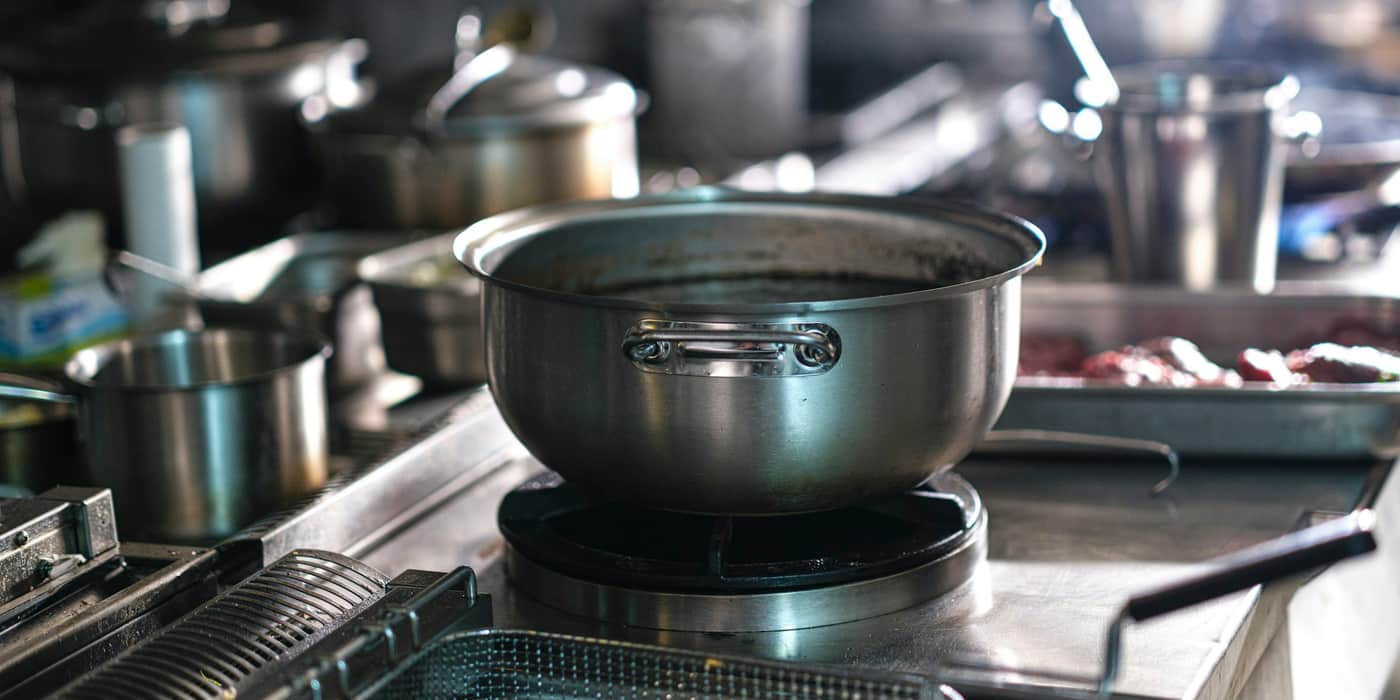
What should a kitchen do when key equipment fails during service?
When key equipment fails during service, a kitchen should write down the time of the failure, protect cold and hot food first, then re-plan the menu around what still works. Keep cooler doors shut, move high-risk food to units holding temperature, and call for service with the model, the symptom and any display code in hand.
What do you do in the first five minutes?
Before anything else, write down the time. Every food safety decision after a failure rests on how long food has been out of temperature, and nobody remembers that accurately at the end of a hard shift. Put the time, the unit and the first symptom on a sheet of paper taped to the unit.
Then decide whether the failure is a safety problem or a service problem. A gas smell, smoke, a burning-electrical smell, a hood that stopped pulling over live burners, or water pouring across the floor near equipment are safety problems. Get people out of the area, shut off the appliance at its switch if you can do so safely, and call the gas utility or 911 from outside if you smell gas. Everything else is a service problem, and the rest of this guide is about those.
Assign one person to run the problem. The line is still cooking, the kitchen manager is expediting, and a dozen people trying to fix a cooler produces three open doors. One lead, one log, one phone call.
How do you protect the food?
The numbers that matter come from the FDA Food Code, which Minnesota's food rules follow: time and temperature control for safety (TCS) food is held at 41°F or colder when cold, and at 135°F or hotter when hot. Anything between is the range where bacteria can grow. When a cooler fails you are racing to keep TCS food out of that range.
Keep the failed cooler's door shut, and see commercial refrigeration repair if the unit itself needs service. A closed walk-in or reach-in holds cold far longer than one opened every few minutes. Pull what you need for service in one trip, then close it. Move the highest-risk items first: raw proteins, cut produce, cooked foods, dairy and anything prepped for tonight, into units that are still holding. Use ice in pans, shallow containers on ice, or a clean cooler with ice for the overflow. Check food with a probe thermometer rather than the display on the failed unit, which may be wrong.
Hot food has the same clock in reverse. If a steam table or warmer fails, use another holding unit, chafing dishes with fuel, or move the food back to the range and heat it to temperature before returning it to holding. Do not try to warm cold food in a unit that is meant only to hold heat.
When do you throw food out?
Your local health authority decides, and the decision rests on the log you started. Minnesota's outage guidance from the Department of Health and the Department of Agriculture treats TCS food held between 41°F and 135°F for more than four hours as discard, and the health department's fact sheet is stricter for some cases. That guidance is written for power outages, and an equipment failure is a similar case, but your licensing agency's inspector decides. If you are close to a limit, call your local health department instead of guessing.
The record is what protects you. Write the probe temperature of the food, the time and the initials of the person who took it every half hour. If the unit is repaired quickly and the log shows the food stayed at 41°F or colder, it stays. If you cannot prove the temperature, assume the worst case.
Cooling rules matter if you must move hot food into a cooler that is working. Cooked food that is not eaten should cool from 135°F to 70°F within two hours and to 41°F within a total of six hours. Do not pile hot pans into a reach-in that is already struggling; spread food into shallow pans and use ice.
How do you work around the failure?
Each type of failure has its own workaround. The table covers the common ones. None of them replaces the repair, and some are only safe for a short stretch.
A good rule is to cut the menu to what the working equipment can make cleanly, rather than running the line with a unit that is half dead. A fryer that heats slowly produces greasy food and a longer ticket time, and a limited menu serves better than a full one served badly.
| What failed | First move | Do not do |
|---|---|---|
| Walk-in cooler or freezer | Keep the door shut, move high-risk food to working units, use ice, probe food temperatures | Prop the door open to keep checking |
| Reach-in or prep table | Move product to other units, keep top-rail pans covered and on ice | Leave raw and ready-to-eat food stacked together to save space |
| Ice machine | Use bagged ice from a sealed supplier, keep scoops out of the bin | Pour ice from a questionable tote into customer drinks |
| Dish machine | Switch to the three-compartment sink with wash, rinse and a sanitizer you can test with strips | Use dishes that have not been sanitized |
| Fryer, range or oven | Move items to working units, simplify the menu | Use a gas appliance that smells of gas or will not light safely |
| Hood or exhaust fan | Turn off the appliances under it and let the line cool | Keep cooking under a hood that is not pulling |
What should you tell the technician?
Give the person who answers the phone facts in a fixed order. Start with the equipment: the type, the brand, and the model and serial number from the data plate. Then the symptom: what happened, when it started, what it did just before. Then the context: what has been tried, what changed recently, and whether the unit shares a breaker or a gas line with anything.
Read out any display code or fault light exactly. Say whether the unit is plugged into a wall outlet or hardwired, and whether anyone reset the breaker. Mention how the tech gets in and who meets them; the full list is in our guide on finding the model and serial number.
We answer emergency calls around the clock, and when you call we give you the earliest opening we have. A diagnosis comes first, then a written price you approve before any repair starts. If your equipment is still under the manufacturer's warranty, call the manufacturer's authorized service network before spending your own money. The guide on finding the model and serial number makes that call faster, and our emergency repair page explains how urgent calls run.
A safe sequence to follow
Write the time down
Record the time and the unit on a sheet at the unit. Every later decision depends on it.
Check for danger first
Gas smell, smoke or burning odors mean clear the area and call from outside. Do not try to repair gas appliances.
Keep cold units shut
Close the failed cooler's door and take out what the next stretch of service needs in one trip.
Move high-risk food
Relocate raw proteins, cut produce, dairy and cooked food into units that are still holding temperature.
Start a temperature log
Probe the food every half hour and write down the temperature, the time and who took it.
Reduce the menu
Cut anything that depends on the failed unit and tell the front of the house.
Call with the details
Have the model, serial, symptom, start time, display code and access information ready.
When to stop and call
- A cooler or freezer is above 41°F and not recovering with the door closed and the breaker checked.
- A fryer, oven, range or dish machine will not run and no safe workaround covers the rest of service.
- A hood has stopped pulling over live cooking equipment.
- Water is leaking from equipment onto the floor or toward electrical components.
- A breaker trips again right after you reset it once.
Questions about this problem
How long can food sit in a failed cooler before it must be thrown out?
Food in a failed cooler is discard once TCS food has been held between 41°F and 135°F for over four hours, under Minnesota's outage guidance from the Department of Health and the Department of Agriculture. The Food Code sets 41°F as the cold limit, and the health department's fact sheet is stricter for some cases. Your licensing agency's inspector has the final say, so keep a probe-temperature log with times.
Should I keep checking the walk-in by opening the door?
No, you should not keep checking the walk-in by opening the door, because each opening lets cold air out and warm air in. Use a probe thermometer through the product you already pulled, or a thermometer visible from outside, and open the door only to retrieve what service needs in a single trip.
Can the dish machine be replaced by hand washing for a night?
Yes, a kitchen can hand wash for a night in a three-compartment sink with wash, rinse and sanitize steps, with sanitizer checked by test strips. Confirm with your health department that your kitchen may do this, and keep the sanitizer at the strength on its label.
What if the hood stops during a rush?
When a hood stops during a rush, turn off the appliances under it. Cooking over a hood that is not exhausting loads the room with heat, smoke and combustion gases, and grease vapors have nowhere to go. Move what you can to a covered line elsewhere and call for service.