
Commercial dishwasher not draining: causes and what to check
Commercial dishwasher not draining or leaving water in the tank? Stopper, scrap tray, drain pump and building drain causes, plus safe checks.
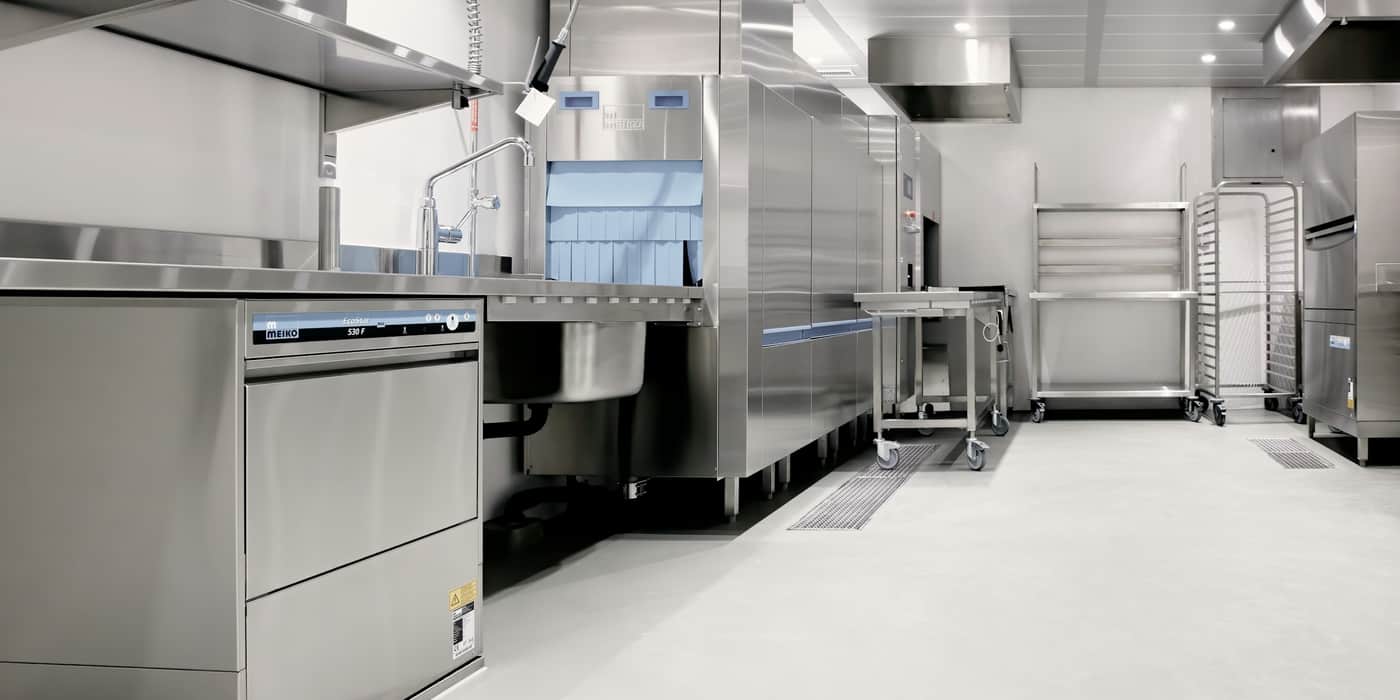
Why is my commercial dishwasher not draining?
A commercial dishwasher that will not drain is blocked at the strainer or scrap tray, held up by a stopper or drain valve that is not opening, failing at the drain pump on an undercounter machine, or backed up in the building drain. Clear the trays safely, then check the floor drain. Valve and pump faults need a technician.
First question: is it a drain problem or an overflow problem?
Water on the floor and water standing in the tank are not the same fault. If water sits in the wash tank after the machine is switched off and the tank is supposed to empty, you have a drain problem. If the tank is full and spilling out of the door or the overflow while the machine is running, the fill valve, the float or the tank level controls are at fault, and that is a different repair. Tell the technician which one you have.
Also note how the machine drains. Some door-type machines drain by lifting a stopper or an overflow standpipe by hand. Others use an electric or lever-operated drain valve that opens at the end of the shift or on a drain button. Conveyor machines drain each tank separately through drain valves. Most undercounter machines and glasswashers empty with a drain pump. Each type fails differently, so the first thing to learn is which one you own.
Are the scrap trays, strainers or stopper blocking the drain?
Most no-drain calls start with debris. Food scraps, napkins, straw wrappers, broken glass and lemon rinds collect in the scrap tray and the strainer basket. When the basket packs full, the pump cannot draw from the tank and the tank drain slows or stops. The overflow standpipe or drain stopper may also be seated crooked, sit on a piece of debris or have a worn rubber seal, and then it leaks water out of the tank instead of holding it, or does not lift when the machine tells it to.
A machine with a lever or linkage drain has a link, pin or cam that can wear loose. If the stopper seems to lift only part way, or the lever feels loose in your hand, the drain is not opening fully. Do not bend the linkage to force it. A bent linkage is a common reason for a drain that works some days and not others.
Pull the trays and baskets, empty them into the trash and rinse them. Look at the tank floor for broken glass, a utensil or a bottle cap sitting over the drain opening. Always switch the machine off at its power switch first, and let hot tank water cool. Tank water in a high-temperature machine can scald.
- Switch the machine off and let the tank water cool before reaching in.
- Wear gloves; broken glass in a tank can cut through a wet towel.
- Pull the scrap trays, strainer baskets and overflow tube, and clear anything in the drain opening.
- Reseat the stopper or overflow tube square and fully down, then run an empty rinse.
Has the drain pump, check valve or solenoid failed?
On an undercounter machine or glasswasher, a drain pump moves the water out through a hose. The usual failures are a jammed impeller, a bearing that has seized, a kinked or crushed hose and a check valve that sticks and lets the water run back. A pump that hums with no flow is almost always blocked by glass chips or labels. A pump that does nothing is likely an electrical fault in the motor, the relay or the control board's drain output.
Machines with an electric drain valve use a solenoid or a motorized actuator. If the actuator is dead, the water stays in the tank, and that is why the drain button seems to do nothing. These are wiring and controls faults, so the operator should stop at confirming the power switch is on and the tank is not clogged. Do not reach into the electrical enclosure.
Most Hobart, Jackson and Champion machines use some version of these parts, though the layout varies with the model, so the data plate matters when you call. Our commercial dishwasher repair page describes how a visit runs.
Could the building drain be the problem?
A machine can drain perfectly and still sit full if the line it drains into is plugged. Look at the floor drain or floor sink the machine empties to. If it is slow, gurgling or has standing water in it, the problem is downstream: food and grease in the trap, a plumbing blockage, or a drain line that was never given enough fall. Kitchens that wash greasy pans in a sink that connects to the same line often see this as grease collects in the pipe.
A blocked drain line can also cause water to back up into the machine's tank when other fixtures run. If your dishwasher fills with dirty water when the pot sink is emptied, the shared drain is the cause, and a plumber, not a dishwasher tech, is the right call. An air gap or drain break that spits water is also usually a downstream restriction.
Do not pour chemical drain cleaner into a dish machine or a connected floor drain. The cleaners can react with the detergent and chlorine sanitizer in the machine and release hazardous gas, and they can damage seals and the stainless tank. Use a plumber or a mechanical drain cleaning method instead.
Why does the drain slow down again after a cleaning?
A machine that drains slowly rather than not at all is often scaled. Hard water leaves lime deposits on the strainer screens, the drain valve seat and the inside of the drain pump housing. Detergent residue and dried food build up in the same places. A deliming cycle done on a schedule cleans the tank and the wash arms, and a deposit-choked drain valve will not seat or open fully until it is cleaned or replaced.
If a machine drains fine after you clean it and then slows again within a week, the pattern points at hardness, a failing softener or a missing scrap trap upstream. That is a maintenance question, covered under commercial dishwasher maintenance and deliming, and for the other common failure, see our guide on a dishwasher that is not sanitizing.
What does each drain symptom point to?
The table below ties what you see to the likely cause so you can describe it on the phone. It is a starting point, not a diagnosis, and the technician will confirm each one at the machine.
| What you see | Likely cause | Who fixes it |
|---|---|---|
| Tank drains slowly, strainer is packed | Debris in scrap tray or strainer | Operator |
| Stopper will not stay seated, tank empties on its own | Worn seal or crooked overflow tube | Operator for reseating; technician for worn parts |
| Drain button does nothing | Dead solenoid or actuator, or control fault | Technician |
| Pump hums, no flow | Jammed impeller or blocked hose | Technician |
| Machine drains but the floor drain backs up | Blocked trap or drain line | Plumber |
| Drains fine, then slows within a week | Scale or residue | Technician; deliming |
A safe sequence to follow
Switch off and cool
Turn the machine off at its power switch and let the tank water cool before you reach in.
Clear the trays
Pull the scrap trays, strainer baskets and overflow tube. Empty and rinse them and clear any debris on the tank floor.
Reseat the stopper
Put the overflow tube or drain stopper back square and fully down. Check that its seal is not cracked.
Run a rinse
Run an empty cycle and watch whether the tank drains at the end.
Check the floor drain
Look at the floor drain or sink the machine empties to. If it is slow, stop and call a plumber.
Stop at pumps and wiring
Do not open the electrical enclosure or pull the drain pump. Call a technician.
When to stop and call
- The tank stays full after the trays are clean and the stopper is seated.
- The drain pump hums, clicks or makes no sound when it should run.
- The drain button, valve or linkage does not move.
- Water backs up out of the machine or a floor drain when the machine drains.
- You see water under the machine that is not coming from the door or the overflow.
Questions about this problem
Why does my dishwasher drain only partway?
A commercial dishwasher that drains only partway usually has debris in the strainer basket, a stopper that lifts only partway because a linkage is worn, or scale in the drain valve seat. A plugged building drain also leaves water in the tank. Clear the baskets first, then watch whether the drain opens fully.
Can I use drain cleaner on a commercial dishwasher drain?
No, you should not use drain cleaner on a commercial dishwasher drain, because it can react with detergent and chlorine sanitizer to release hazardous fumes and can damage seals and stainless parts. Clear the trays by hand and call a plumber for the building drain, since both the machine and the drain line can be damaged.
Why does my undercounter dishwasher hum but not drain?
An undercounter dishwasher that hums but does not drain usually has a drain pump impeller jammed by glass chips, labels or debris, or a discharge hose that is kinked or blocked. The pump has to be opened to clear it, so call rather than disassembling it while it is powered. Switch the machine off and leave the pump housing closed.
Why does my dishwasher fill with dirty water when the pot sink drains?
A dishwasher tank that fills with dirty water when the pot sink empties is usually not a machine fault, because both are on a shared drain line that is partly blocked. A plumber clears the line. The dish machine itself may be fine.